5 hr
Oahu Guided Rainforest Hike to Manoa Falls with Scenic Lunch
- Entry ticket
- Mobile voucher
- Valid same day
- Free cancellation
Lyon Arboretum Tickets — Reserved Entry to Manoa Valley's Rainforest Garden
Rain falls on ridge and canopy, ferns hold the light.
Compare fares, pick the fit — all bookings are mobile-voucher and eligible for free cancellation where shown.
5 hr
5 hr
9 hr
| Experience | Duration | Rating | Transfers | Lunch | Guide | Free cancel. | Price | |
|---|---|---|---|---|---|---|---|---|
|
Standard Entry
Most popular
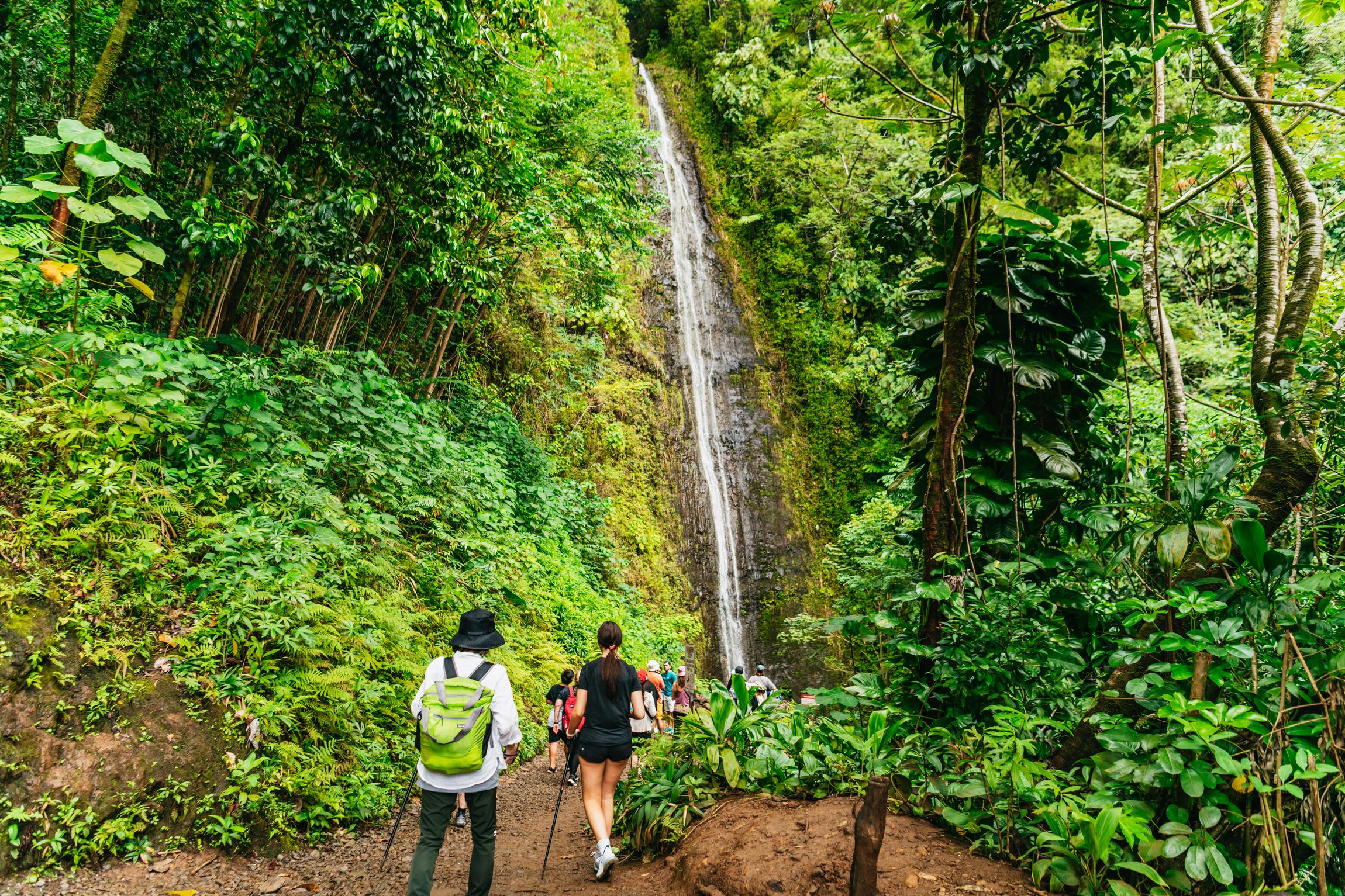
Oahu Guided Rainforest Hike to Manoa Falls with Scenic Lunch
|
5 hr | ★ 4.8 | ✓ | ✓ | ✓ | ✓ | €103 | Book → |
|
Luxury / Private
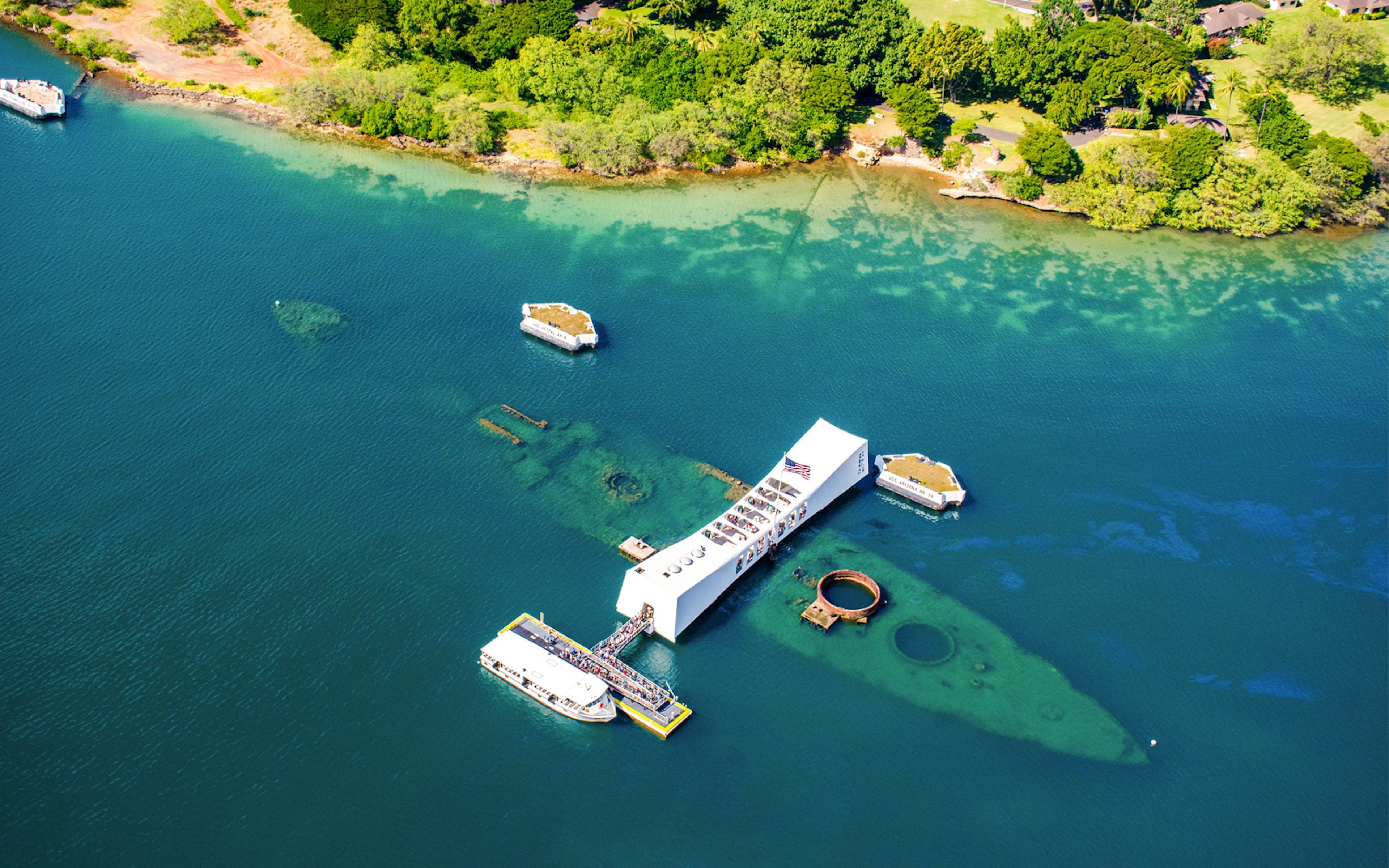
Private Pearl Harbor & USS Arizona Tour from Honolulu
|
5 hr | — | ✓ | — | — | ✓ | €454 | Book → |
|
Guided Experience
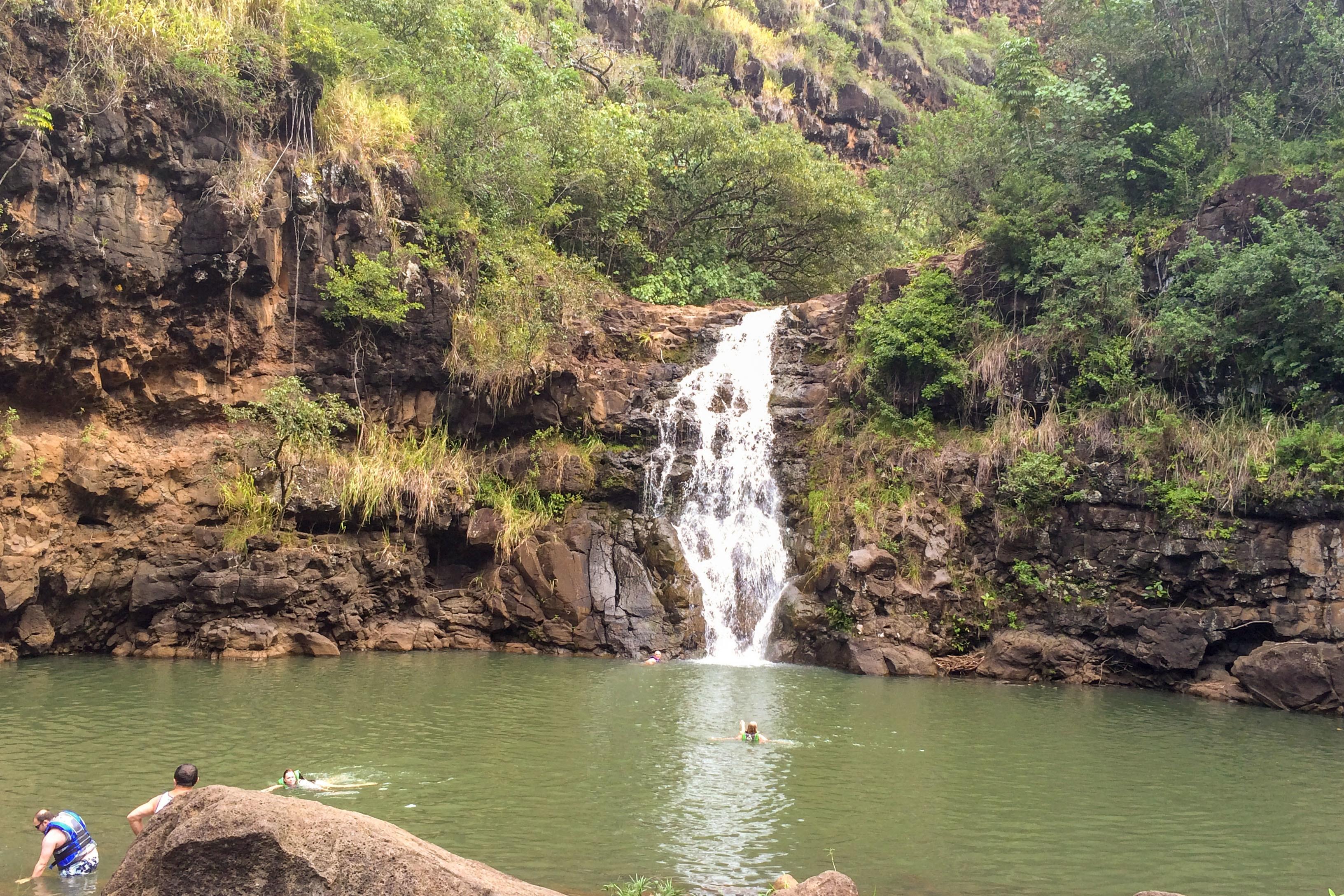
Oahu Island Full-Day Guided Bus Tour with Waimea Valley & Lunch
|
9 hr | ★ 4.6 | ✓ | ✓ | ✓ | ✓ | €148 | Book → |
Hand-picked experiences loved by thousands of travelers
1.5 hours
Explore famous film sets from Jurassic Park and Jumanji on an open-air safari ride through Kualoa Ranch.
4 hours
Free Cancellation
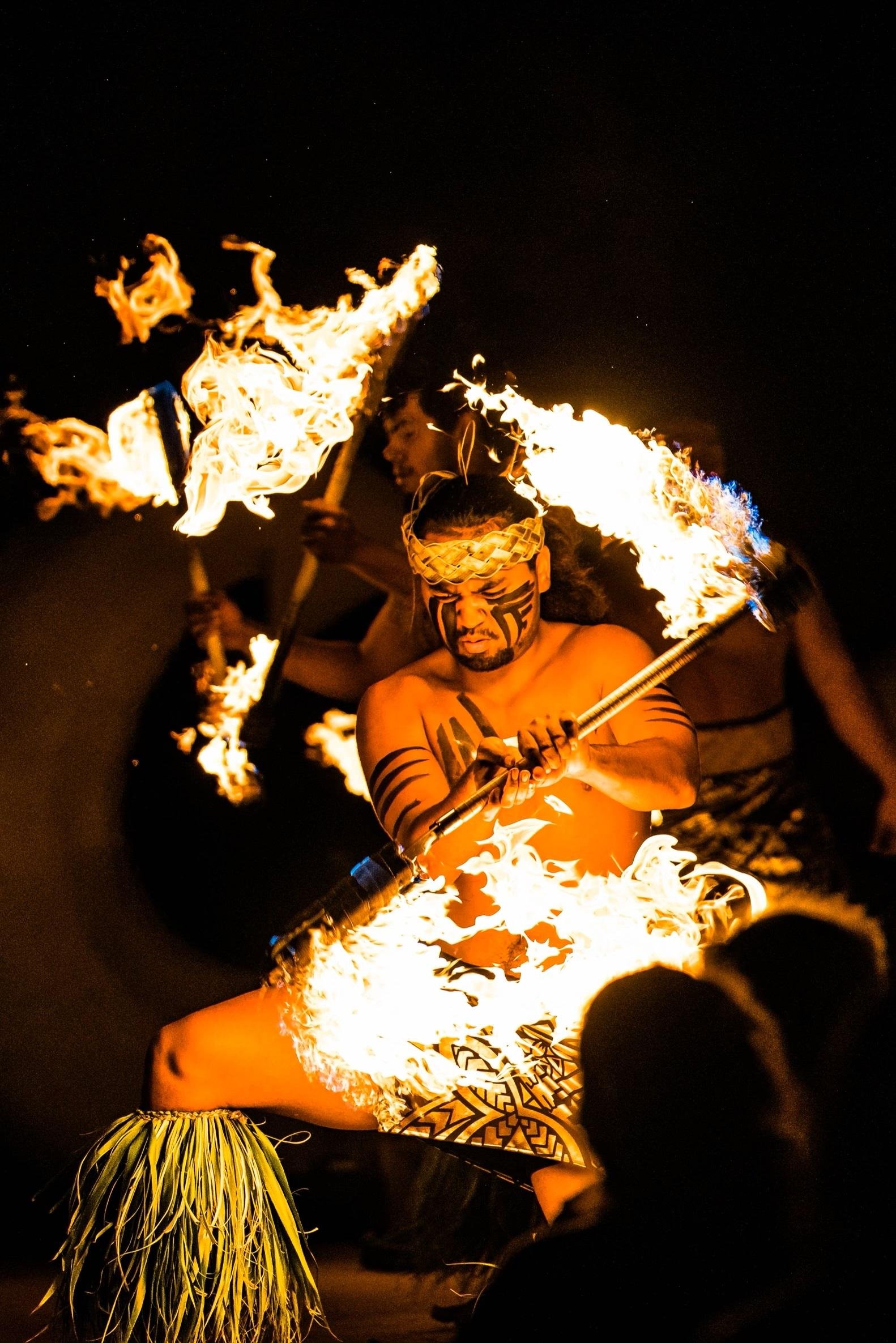
Experience an interactive Polynesian warrior show, try traditional crafts, and enjoy a scenic island buffet.
10 hours
Free Cancellation
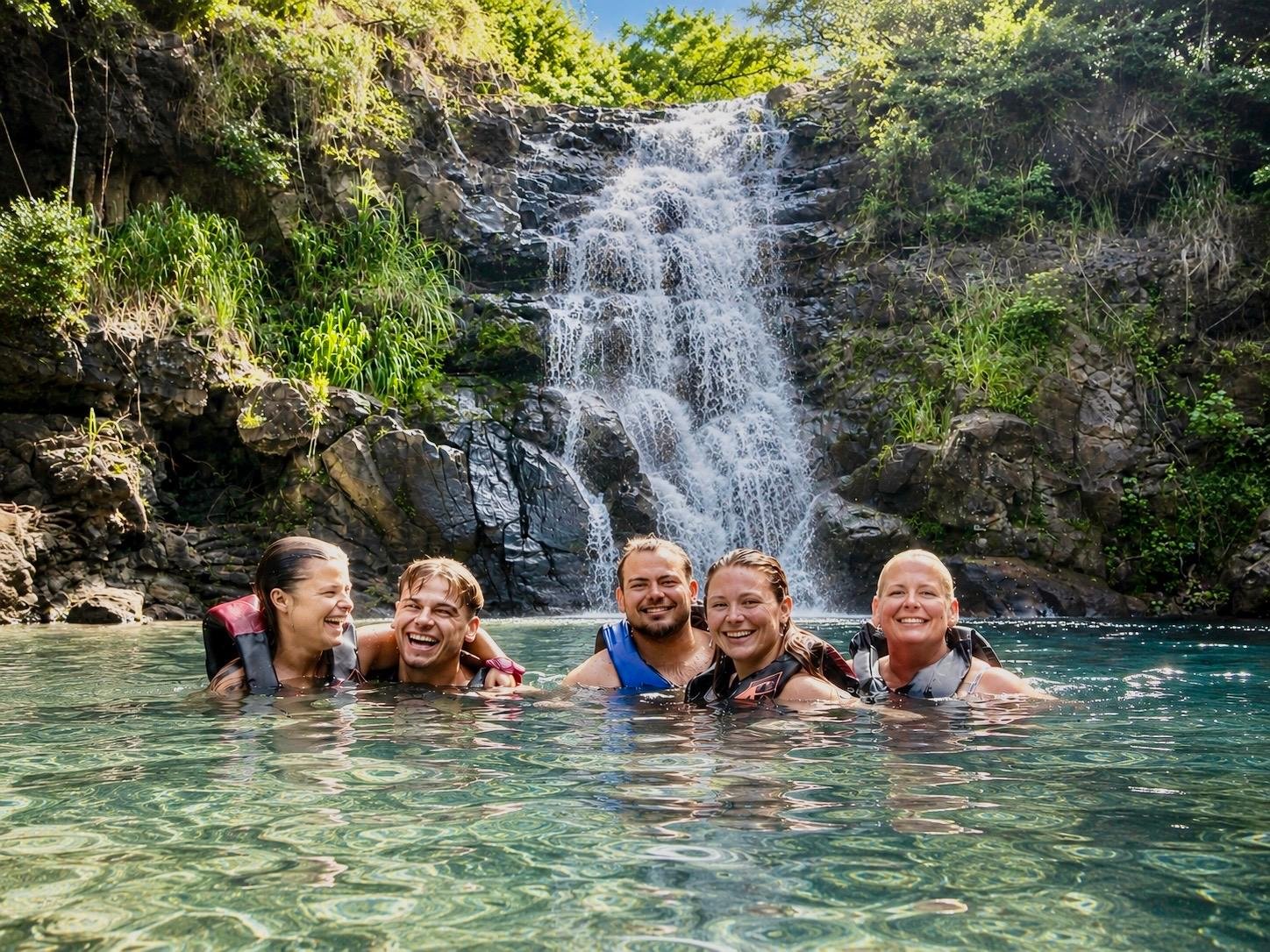
Discover Oahu's highlights, swim at Waimea Falls, and taste local specialties on this intimate guided loop.
4 hours
Free Cancellation
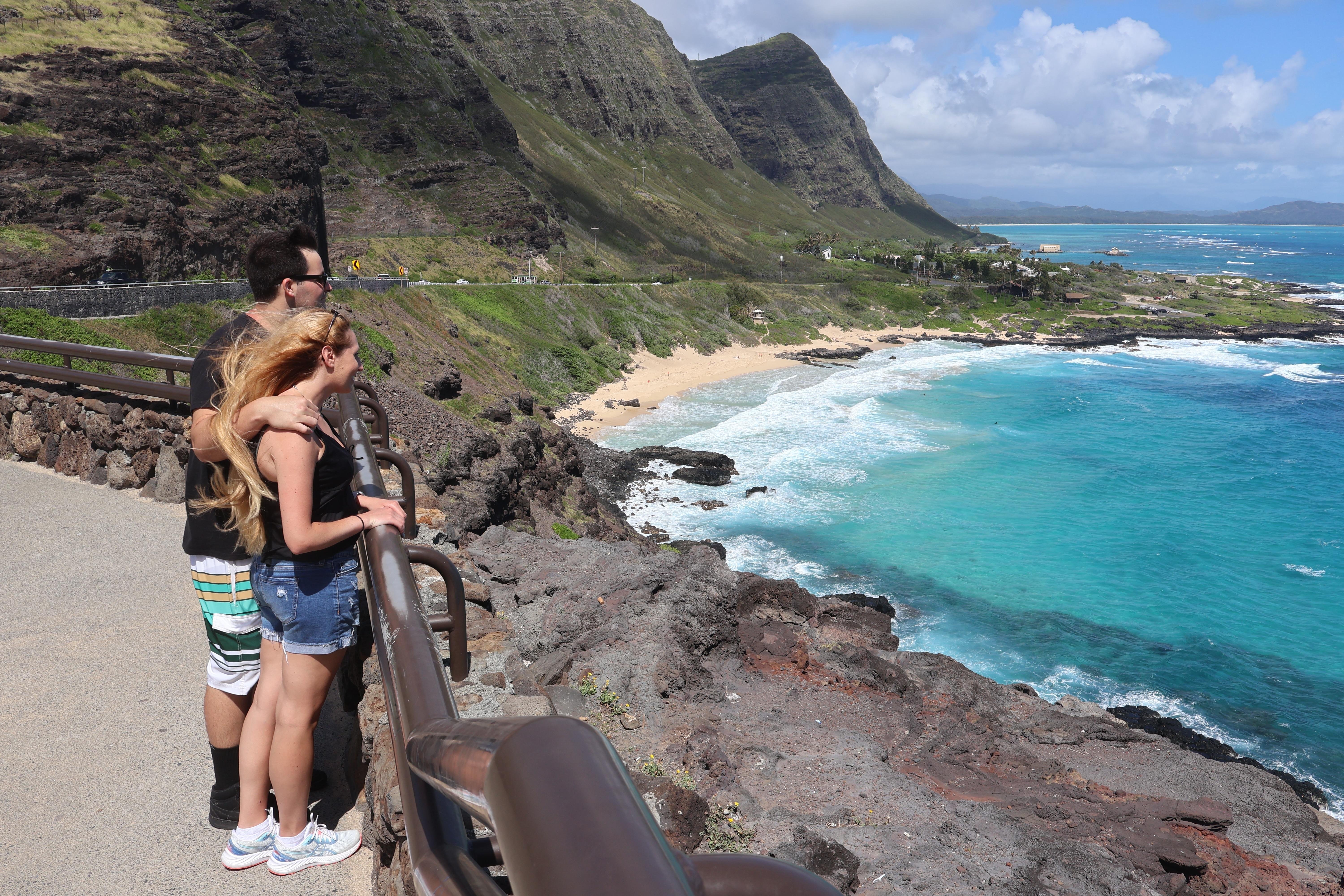
Discover seven of Oahu's most spectacular viewpoints and get professional photos on this half-day guided tour.
8 hours
Free Cancellation
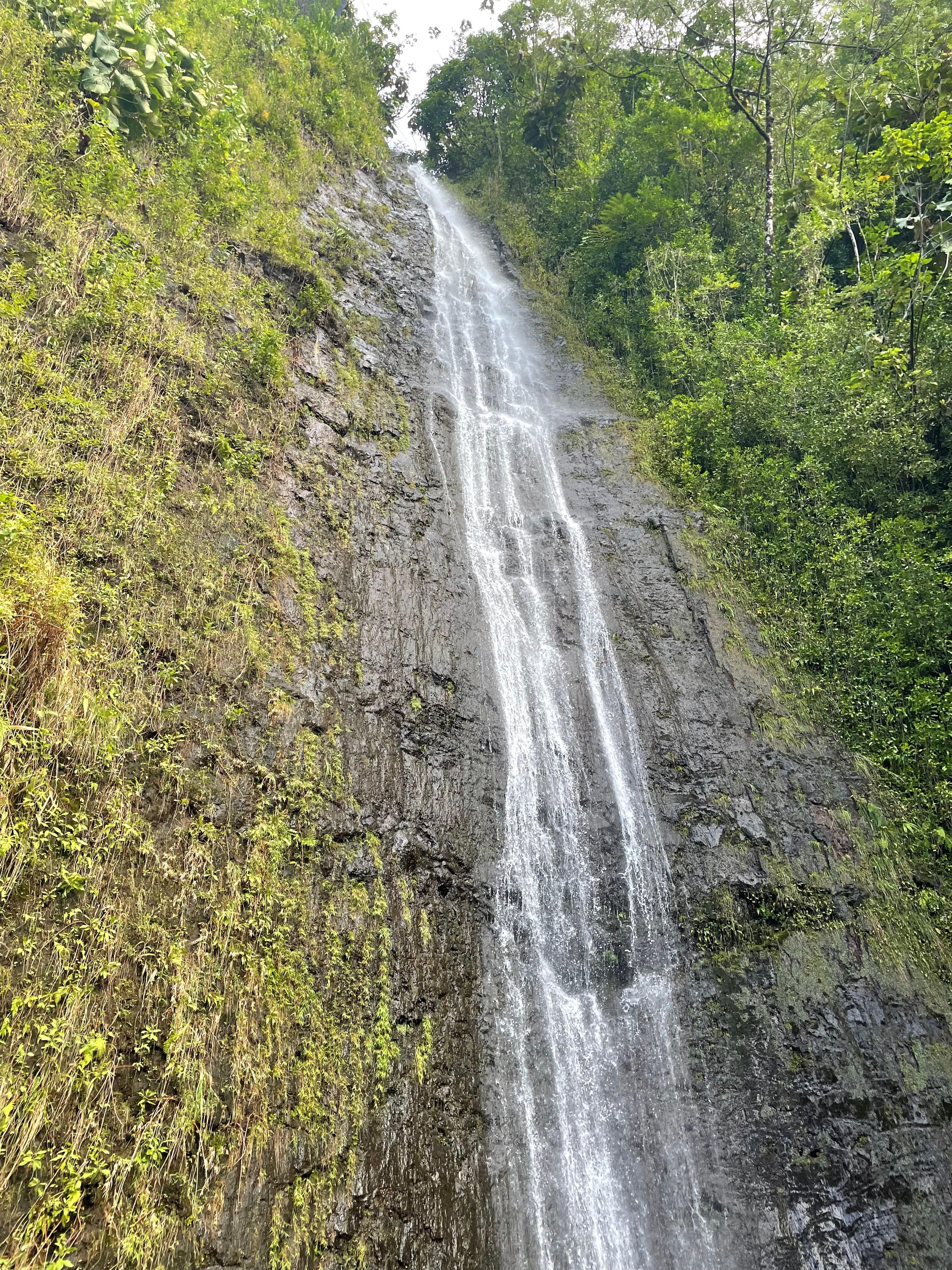
Trek to a 300-foot waterfall in a lush rainforest, see iconic coastal lookouts, and unwind on a top-rated beach.
Sign the guest log, pick up a trail map, and leave the suggested $10 donation before starting your Lyon Arboretum Tickets visit
Walk the paved loop past the Betty Ho, Stemmermann, and Young Memorial Gardens near the parking area
See kalo, ulu, and other canoe plants brought by Polynesian voyagers over 1,700 years ago
Pass timber, food, and medicine plants including cacao and durian along the main path
Uphill trek on uneven, often slick ground to the waterfall, which runs only after recent rain
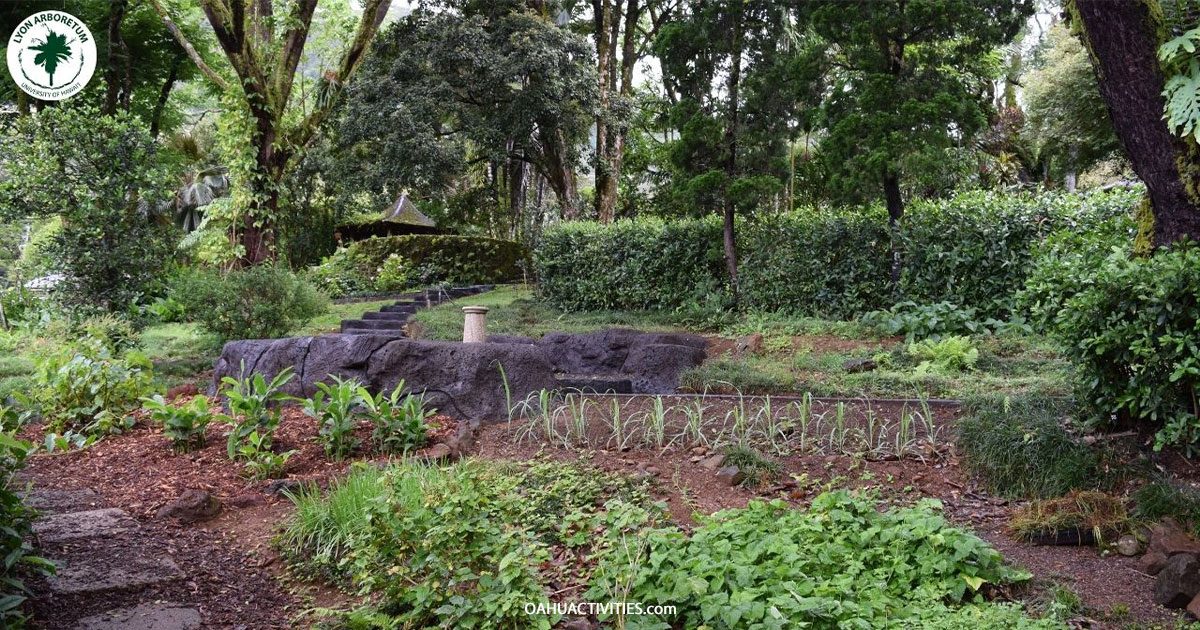
This garden displays over 60 plant species tied to traditional Hawaiian culture, including 27 canoe plants brought by Polynesian voyagers more than 1,700 years ago. Kalo and ti are grown here alongside plants once used for lei-making and traditional medicine.
Set along the Main Trail, this section groups trees and plants valued for timber, food, and medicine, including acai palm, cassava, durian, and the lipstick plant used for natural dye. It reflects the arboretum's 1918 origins as a site for testing economically useful species.
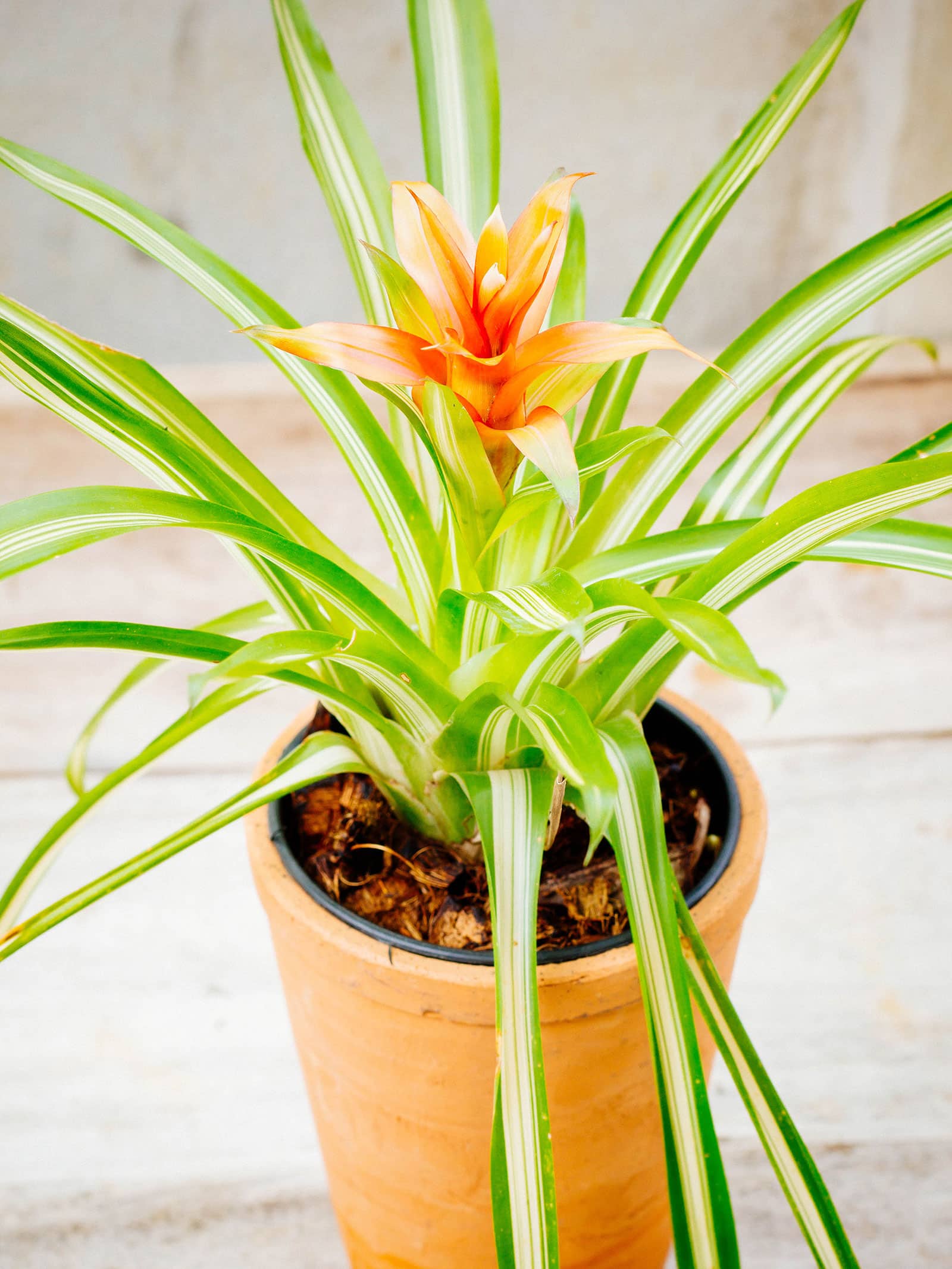
Known for its bromeliad collection, this garden sits along the paved path near the Visitors Center and is one of the few sections fully accessible by wheelchair. Its bromeliads extend well beyond the familiar pineapple family into dozens of ornamental varieties.
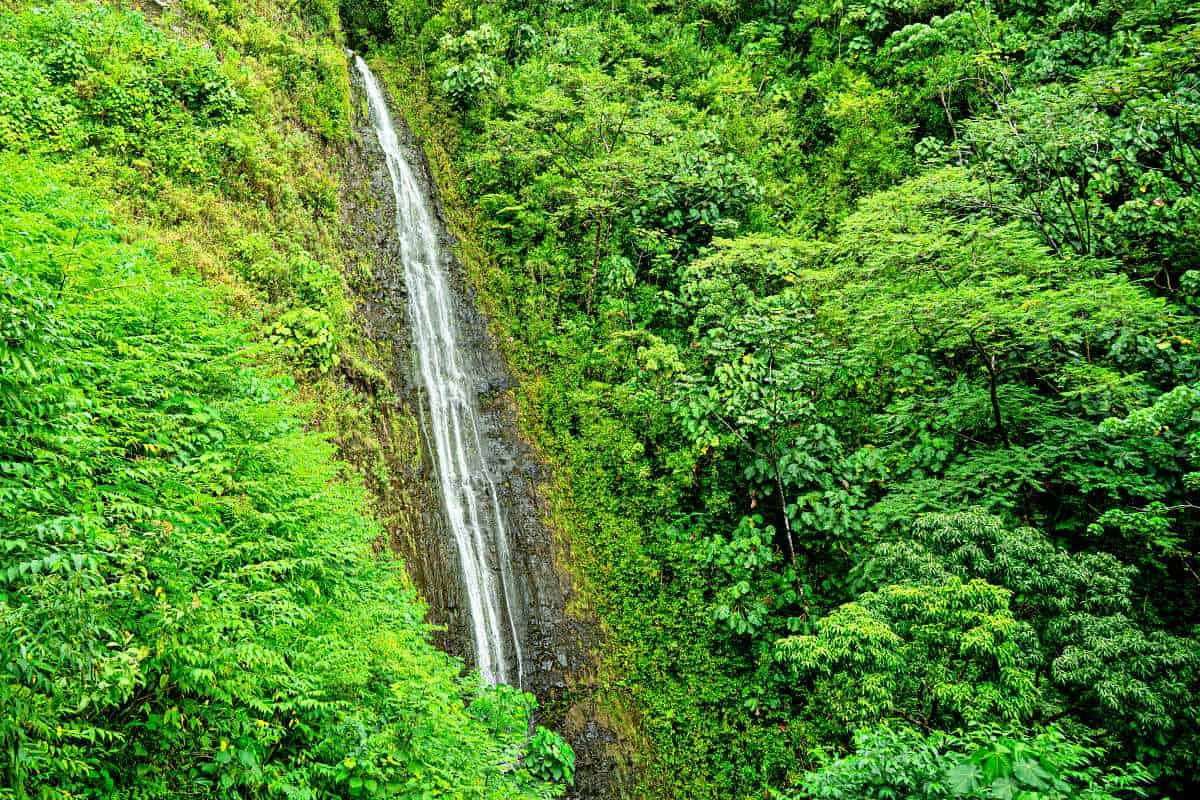
Reached via an uphill hike from the Main Trail, this waterfall runs only after significant rainfall and can stop entirely during dry stretches, so its flow varies visit to visit. The surrounding trail is rocky and can be slippery, making sturdy footwear essential for the climb.
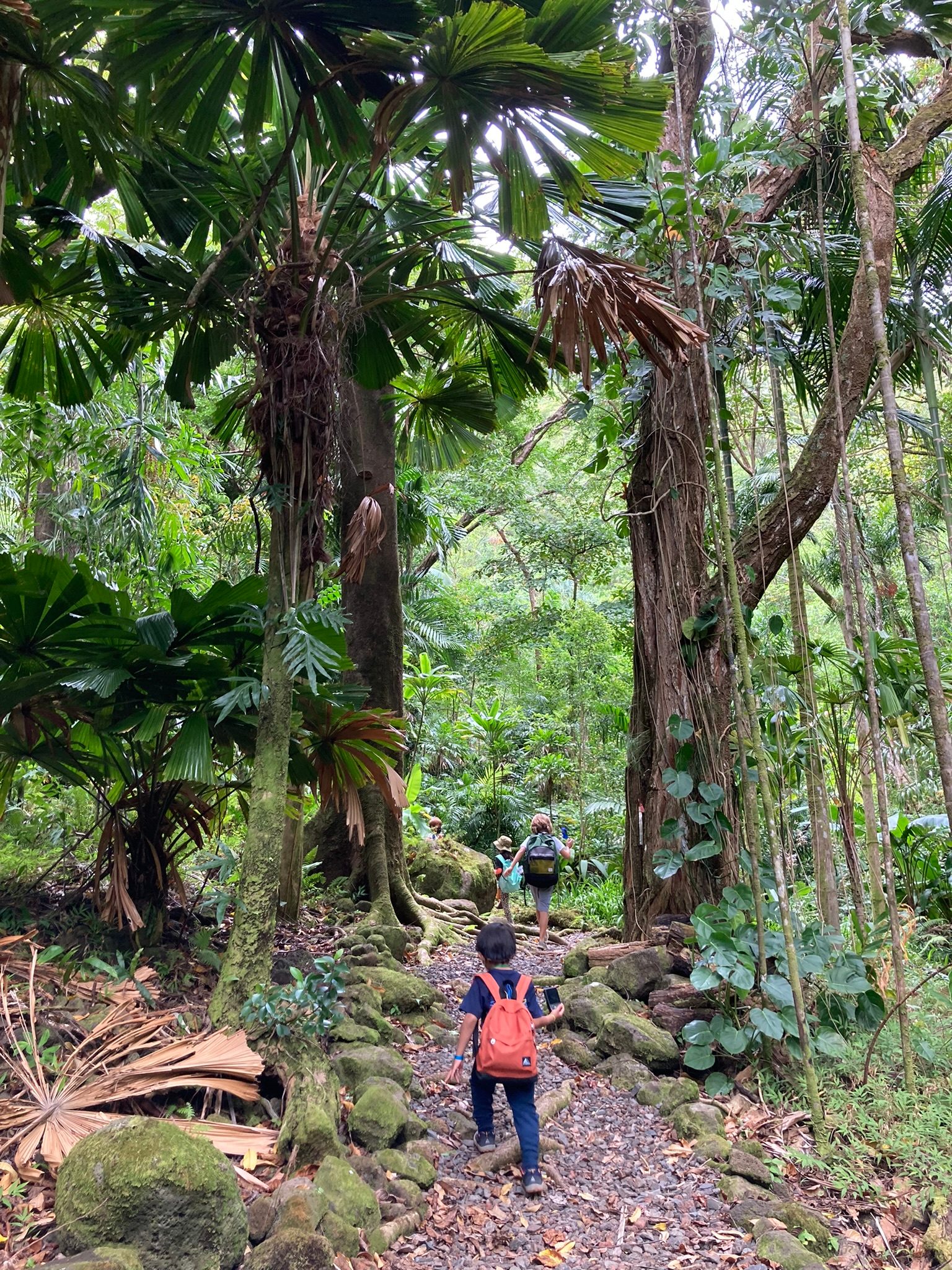
This walk showcases part of the arboretum's palm collection, described as the largest in any botanical garden with roughly 15,000 accessions across the property. The path runs downhill from the Rain Shelter toward the Main Trail through dense palm cover.
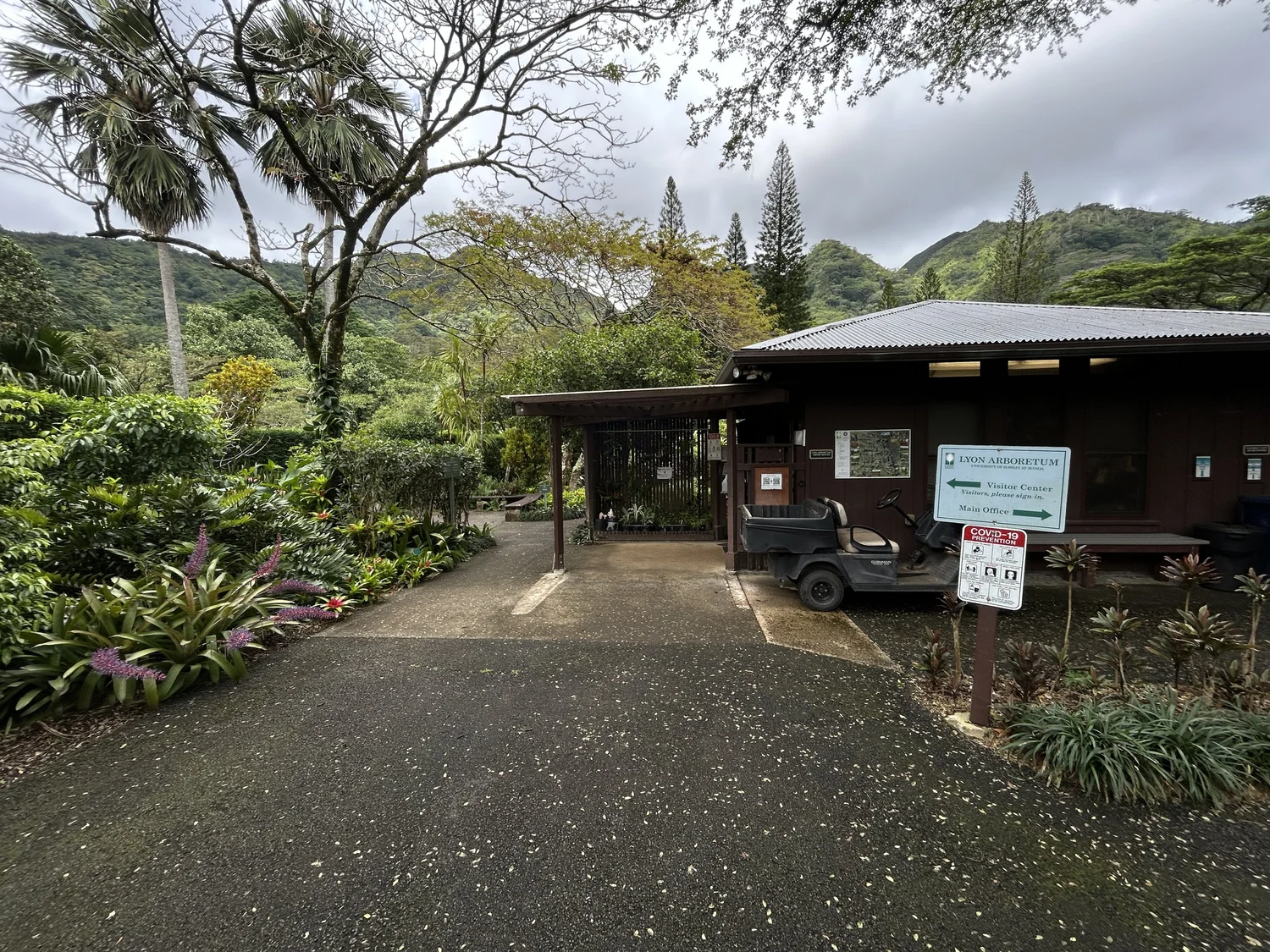
Located near the parking lot, this pair of landmarks serves as the arboretum's central orientation point, with paths behind it leading to the Bromeliad Garden and Inspiration Point. The shelter offers visitors a covered rest stop during Manoa Valley's frequent showers.
You turn off Manoa Road at 3860, past the last houses, and the pavement narrows until the valley closes overhead. Arrive between 09:00 and 11:00 and you get the cooler air, before the humidity settles and well before the 15:00 closing.
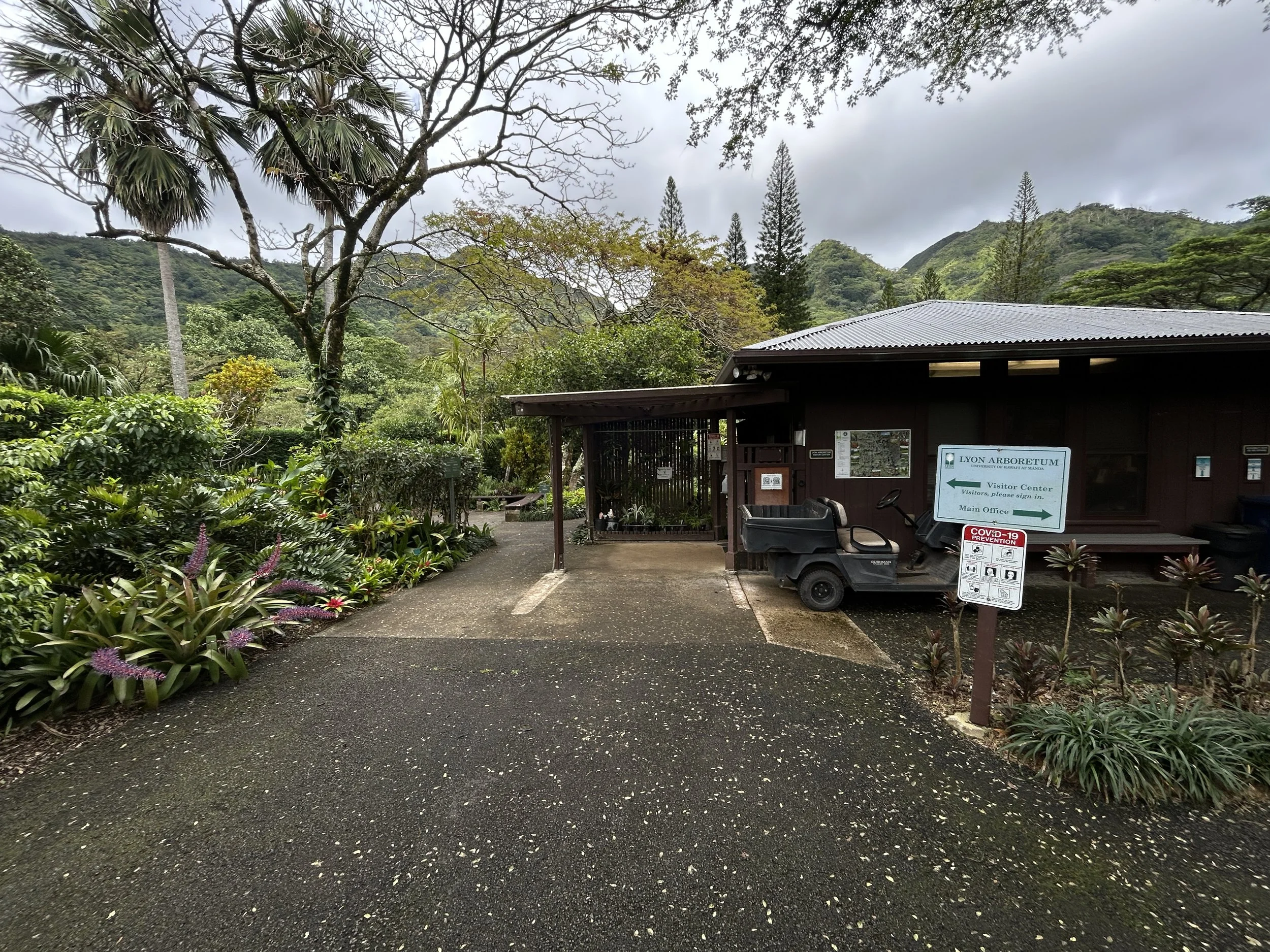
You register at the visitor centre, leave your $10 donation if you choose to, and step onto the main path with the sound of running water already ahead of you.
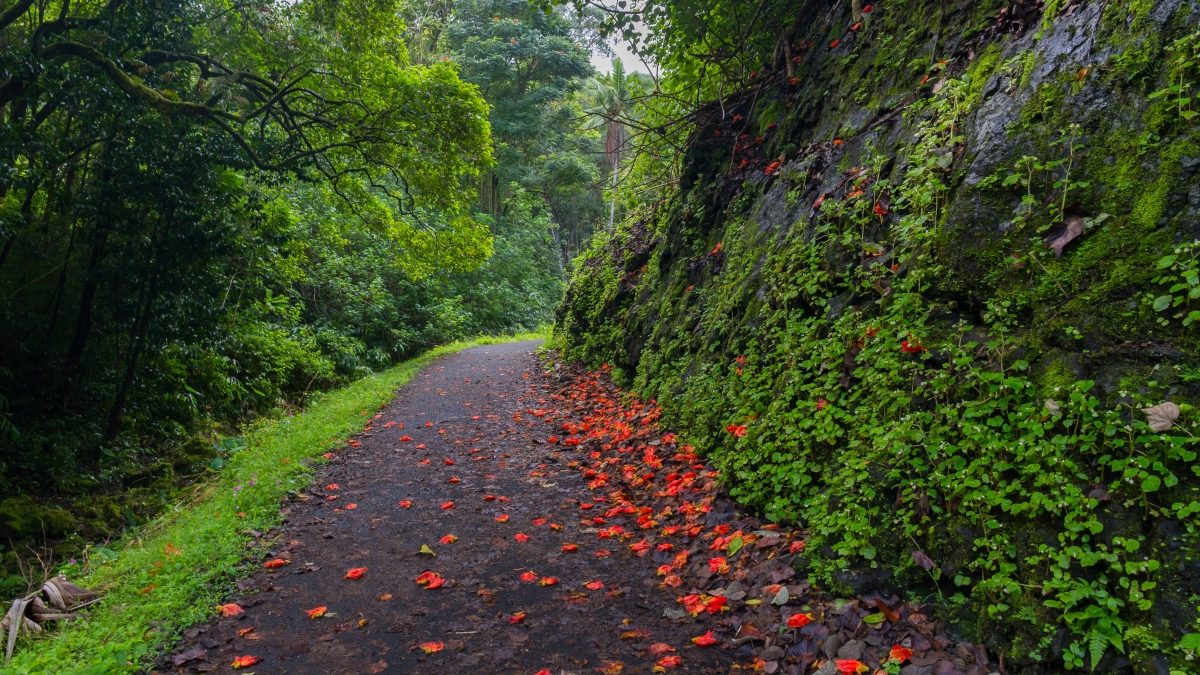
The first stretch is gentle and paved. You pass the ethnobotanical terraces, where kalo grows in shallow standing water, then the palm collection, where fronds close over the track. Ten minutes in, the surface turns to packed red mud and roots. You watch your footing. The gingers begin here — torch ginger heads at chest height, shell ginger arching over the trail edge.
Climb another fifteen minutes and the canopy opens at Inspiration Point. You sit. Below you the valley runs straight out to the coast, and the ridge behind is usually half-hidden in cloud. Most visitors turn back here; a Lyon Arboretum Tickets tour will often continue toward the Aihualama junction instead, where the bamboo stand starts.
Coming down, you take the loop past the greenhouses. Staff are usually working the seed lab benches through the glass. You reach the gate with damp shoes and a phone full of green, and Manoa is still dropping rain behind you.
All the details about your upcoming adventure in one place
Set at the back of Mānoa Valley, this 200-acre University of Hawaiʻi botanical research garden holds more than 5,000 tropical plant taxa, including native Hawaiian species, palms, gingers, and heliconia collections spread across shaded trails. Lyon Arboretum Tickets tours give access to the Inspiration Garden, the Hawaiian ethnobotanical plantings, and the trail leading toward ʻAihualama Falls. Rainfall here averages well over 100 inches a year, which is exactly why the canopy feels so dense.
The 200-acre tract at the back of Manoa Valley was once planted to prove that a denuded watershed could be brought back. Sugar planters bought the land in 1918 and handed the reforestation work to Harold Lyon, a plant pathologist who introduced roughly 2,000 tree species to Hawaii across his career.
The University of Hawaii took ownership in 1953. What began as an erosion experiment is now the only university-administered tropical rainforest botanical garden in the United States, and Lyon Arboretum Tickets remain among the least commercial points of entry to a Honolulu landmark.
The collection reads as a working archive rather than an ornamental display. More than 5,000 accessioned taxa grow across the slopes, arranged in living collections of palms, gingers, heliconias, aroids and bromeliads. A separate Hawaiian ethnobotanical garden holds canoe plants — kalo, ʻulu, kō, wauke — cultivated in the terraces below the main path. The Hawaiian Rare Plant Program operates a micropropagation laboratory on site, holding tissue cultures and seed stock for species reduced to a handful of wild individuals. Some of the plants growing here no longer exist anywhere else on Oahu.
Manoa Valley receives roughly 165 inches of rain a year, and the arboretum sits at the wet upper end of it. That rainfall explains the structure of the place. Trails climb from around 450 feet to 1,850 feet at the ridge, moving through distinct moisture zones within a twenty-minute walk. The Aihualama Trail leaves the property boundary toward the Koʻolau crest. The shorter Inspiration Point path ends at a bench facing down the valley toward Diamond Head. Manoa Falls lies just beyond the arboretum's land, on a separate access.
The buildings are deliberately modest: a low visitor centre, a herbarium, a seed conservation lab, greenhouses screened by monstera and philodendron. Nothing here competes with the canopy. The 1918 planting scheme is still legible in the mature stands of mahogany and Ceylon ironwood along the lower loop, trees now approaching their second century. Because the site is a research facility first and a public garden second, Honolulu Lyon Arboretum tours tend to be quiet, small, and led by staff who know individual specimens by accession number.
Admission reflects that mission. Entry is free, with a $10 suggested donation per person that funds the rare plant work directly. Lyon Arboretum Tickets tickets are therefore less a transaction than a registration — a way of counting who walks the ridge and of keeping the conservation programme funded through visitors rather than gate revenue.

What began as an erosion experiment is now the only university-administered tropical rainforest botanical garden in the United States.
Closed-toe shoes with tread are essential, since the Main Trail and Larry Helber Palm Walk turn slick and muddy after Manoa's frequent rain showers. Lightweight, quick-dry clothing works best given the humid rainforest microclimate, and a rain jacket is worth packing even on a clear Honolulu morning.
Visitors sign in at the Visitors Center before heading onto the grounds; there is no bag-check or metal detector, but staff ask that daypacks be worn on the front on narrower trail sections near the stream crossings. Valuables should stay with you, since the Visitors Center restroom and gift table are the only staffed areas along the 194-acre property.
Personal photography and phone photos are welcome throughout the gardens and along the Main Trail, including near ʻAihualama Falls when it is running. Tripods and drone use for anything beyond casual personal shots require prior approval from arboretum staff at the Visitors Center check-in desk.
Children are welcome throughout the grounds, and strollers manage the paved Visitors Center loop but not the sloped forest trails beyond it. The property has one restroom, located at the Visitors Center, so plan bathroom stops before setting out on the Main Trail.
The paved sidewalks circling the Visitors Center reach the Betty Ho, Stemmermann, Young, and Mapes Memorial Gardens and are wheelchair passable. Beyond that loop, the sloping terrain, exposed roots, and stream crossings on the Main Trail and Palm Walk are not wheelchair-accessible.
Bottled water is allowed and recommended given the humid climate, but there is no café or food service on site, so any snacks must be packed in and packed out. Eating is limited to the picnic-friendly areas near the Visitors Center rather than along the forest trails themselves.
Quiet weekday morning
Midweek, lightest foot traffic
Busiest weekday, groups common
Closed to the public
Hours
Mon–Fri 09:00–15:00, closed Sat & Sun and state/federal holidays
Address
3860 Manoa Rd, Honolulu, HI 96822, United States
Mobility
Paved paths only near Visitors Center; forest trails are steep, uneven, unpaved
Best window
09:00–11:00 for cooler temperatures and full time before the 3pm close
Entry fee
Free entry, $10 suggested donation per person
Car · About 15 min from downtown Honolulu · Free but limited stalls, fills quickly
Drive up Punahou St. to Manoa Road, continuing past Paradise Park to the arboretum entrance and free on-site parking lot
Public transport · About 22 min bus ride plus a 15-min walk · Standard TheBus fare
Take TheBus Route 5 from Ala Moana Center toward Manoa Valley and get off at the last stop, then walk about 0.6 miles uphill past Paradise Park
Walk · Roughly 15-20 min on foot · Free
From the Route 5 last stop, walk up the access road past the Manoa Falls trailhead, through the gates, to the Visitors Center
Taxi/Rideshare · About 15 min from Waikiki · Metered fare, no fixed rate
Direct drop-off at the arboretum's driveway near the Visitors Center parking lot
Lyon Arboretum Tickets require no advance reservation and no prepayment, since entry is free with a suggested $10 per-person donation, so there is nothing to cancel or refund. Group visits of eight or more must be arranged directly with the Lyon Education Department, and those coordination fees follow the operator's own group-booking terms rather than a standard refund window.
Recommended time
2-4 hours
A garden-only stroll through the arboretum's collections fills roughly two hours, while adding the out-and-back hike to Aihualama Falls stretches most visits toward three to four hours, since that trail alone runs one to two hours each way at a relaxed pace. Booking Lyon Arboretum Tickets in the 09:00-11:00 window means cooler air, softer light for photos, and the thinnest paths before the 15:00 closing forces everyone out. Because the grounds operate Monday through Friday only, there is no Saturday-versus-Sunday crowd swing to plan around, just the natural morning-to-afternoon build within each open day. Queues are rarely an issue here; the sign-in desk moves quickly even when a school group arrives.
Crowd levels through the day
Weather · crowds · average price — dots go green to amber to red as each metric rises.
Wetter season with the heaviest rainfall, which keeps Aihualama Falls running but makes trails slicker. Cooler air makes the 09:00–11:00 morning arrival especially comfortable.
Rain tapers off gradually and canoe plants in the ethnobotanical garden are actively flowering. Crowds stay light on weekday mornings before the 3pm close.
Drier stretches are common, so the waterfall may stop running for days at a time; call ahead to check. Humidity is highest, making the early opening window the most comfortable time to walk the Main Trail.
Rain returns gradually through November, refreshing the stream and waterfall flow. Weekday visitor numbers are typically at their lowest of the year outside university breaks.
Construction and seed-lab renovations cause intermittent short-notice closures, so call +1-808-988-0456 or check the official site before driving up.
There is no card reader at the Visitors Center, so exact cash makes the $10 suggested donation simpler.
The on-site lot has limited stalls and fills quickly on weekday mornings; overflow parking is available at the Paradise Park lot for a fee.
ʻAihualama Falls runs only after recent rain and stops during dry spells, so a quick call confirms whether it's flowing that day.
Trail sections beyond the paved Visitors Center loop are rocky, rooted, and slippery when wet, so sandals and flip-flops are discouraged.
The humid rainforest setting supports a steady mosquito population year-round, even on breezy days.
Schools, tour groups, and organizations need advance coordination through the Lyon Education Department before arrival.
3860 Manoa Rd, Honolulu, HI 96822
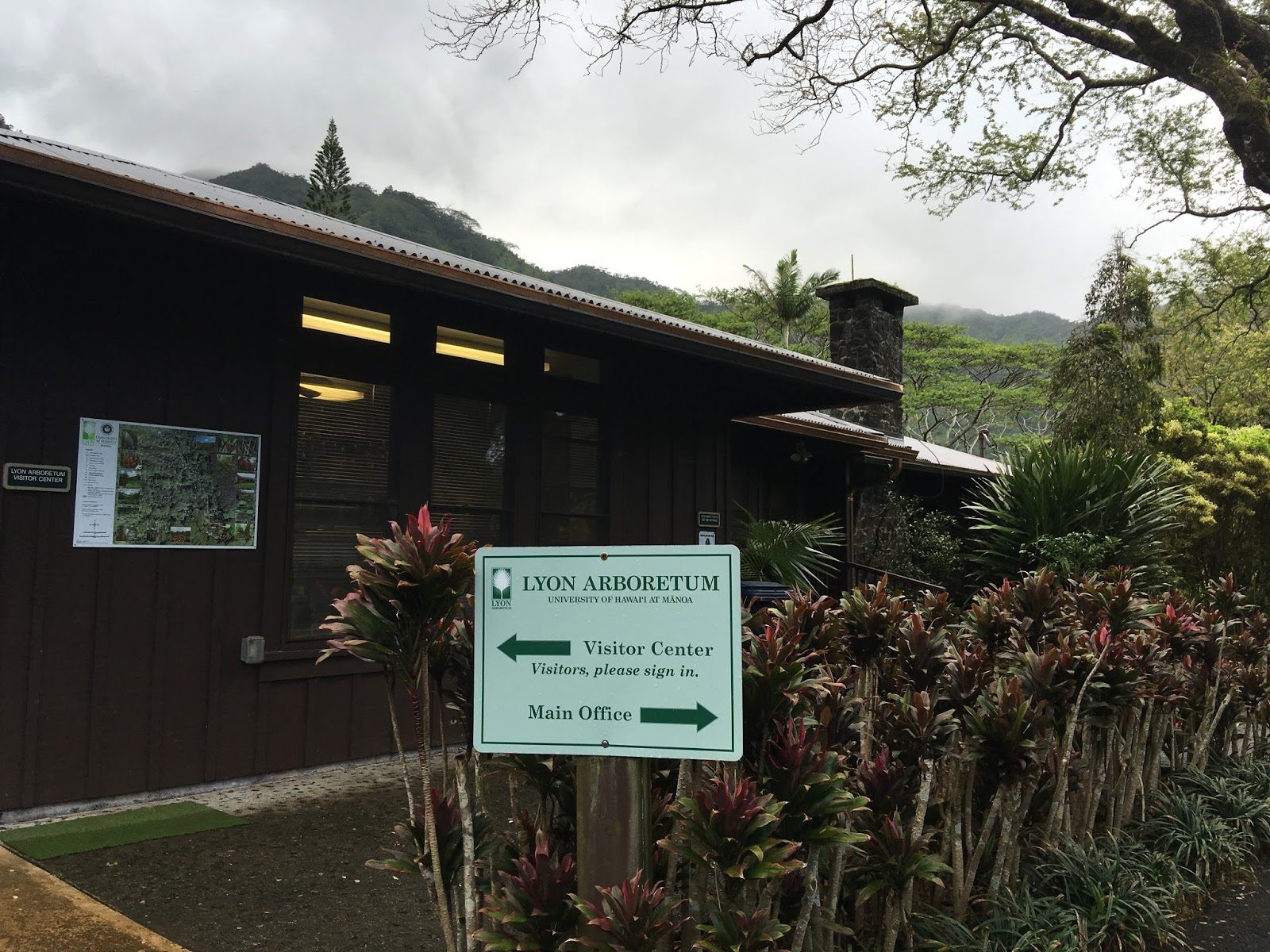
Sign-in point, adjacent to the main parking lot
Get directions
Lower grounds near parking lot
Landmark reference point where the Main Trail and Palm Walk diverge
Get directionsManoa Road terminus, Honolulu
About a 0.6-mile walk uphill to the arboretum entrance
Get directionsThe garden at the head of Manoa Valley began as an experiment in repair. In 1918 the Hawaiian Sugar Planters' Association leased 124 acres of grazed-out upper Manoa land and set out to prove that a stripped watershed could be re-forested. Cattle had cropped the slopes bare. Irrigation for the cane fields below depended on rainfall the denuded ridges no longer held. The site was chosen for its rain: roughly 165 inches fall on the upper valley each year. Visitors who buy Lyon Arboretum Tickets today walk through the surviving evidence of that agricultural gamble. Direction fell to Harold Lloyd Lyon, a Minnesota-trained plant pathologist who arrived in Hawai'i in 1907 to study a sugarcane disease and stayed for the rest of his life. Lyon ran the Manoa planting programme from 1918 until his death, introducing close to 2,000 tree species and some 10,000 varieties of plants to the islands. His method was frankly experimental rather than ornamental. He planted what he thought might hold soil, tolerate rain, and survive, and much of it did. The canopy of Australian, Southeast Asian and Neotropical trees that shades a Honolulu botanical garden tour is largely his catalogue, matured. The institutional turn came in 1953, when the Planters' Association transferred the property to the University of Hawai'i. The deed carried a stipulation: the land was to be maintained in perpetuity as an arboretum and botanical garden. That clause has outlasted several funding crises. Lyon died in 1957, having asked that his ashes be scattered among the trees he planted; the University renamed the grounds the Harold L. Lyon Arboretum that same year. The holding has since grown to roughly 200 acres, with a research herbarium, a micropropagation laboratory and a seed conservation programme working on endangered Hawaiian taxa. Much of what a Lyon Arboretum Tickets tour passes is therefore a working collection rather than a display. Landslides and storm damage have repeatedly closed the upper trails, most severely in recent decades. Those booking Lyon Arboretum Tickets tickets should note the reservation system reflects a research site, and Lyon Arboretum Tickets tours remain capped accordingly.
The Hawaiian Sugar Planters' Association establishes an experiment station on 124 acres in upper Manoa to test watershed reforestation.
Harold L. Lyon directs the planting programme, introducing close to 2,000 tree species to the Hawaiian Islands.
The Planters' Association transfers the property to the University of Hawai'i with a stipulation that it be maintained in perpetuity as an arboretum.
Lyon dies and his ashes are scattered among his plantings; the University renames the grounds the Harold L. Lyon Arboretum.
The arboretum expands toward its present extent of roughly 200 acres and adds formal research collections.
Micropropagation and seed conservation laboratories are developed to bank endangered Hawaiian plant species.
Repeated flood and landslide damage forces long closures of the upper Manoa trails and prompts a timed reservation system.
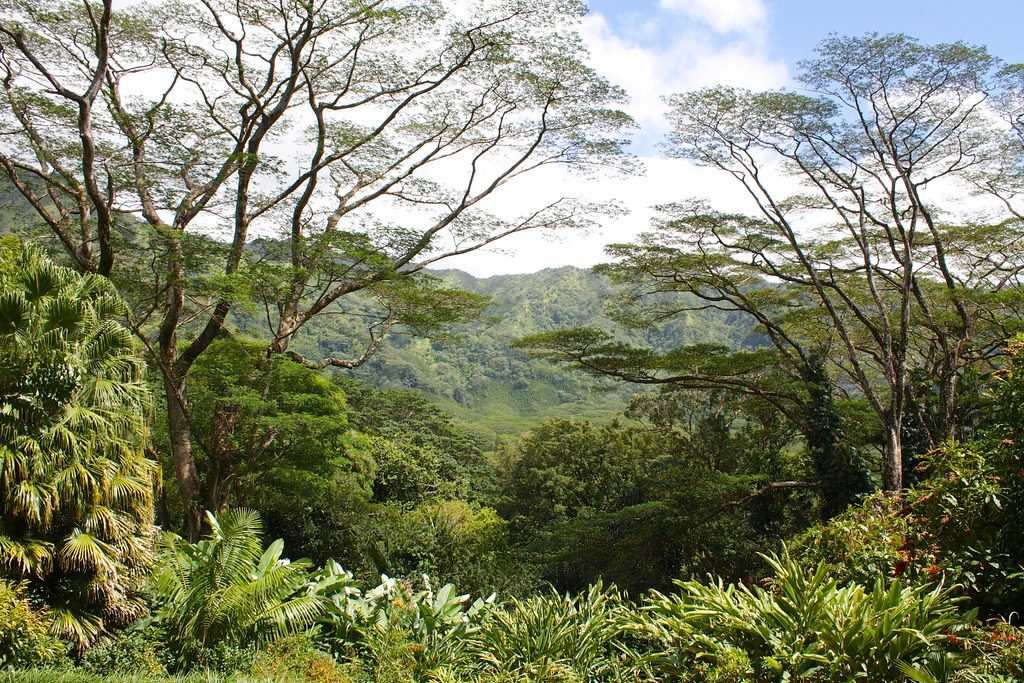
A scenic overlook reached via a steep trail climb, framing layered ridgelines above Manoa Valley with a wide grassy clearing for a clean foreground. On clear mornings you can see past the ridges toward Honolulu and the ocean beyond, making this the spot most people photograph before planning Lyon Arboretum Tickets around the hike.
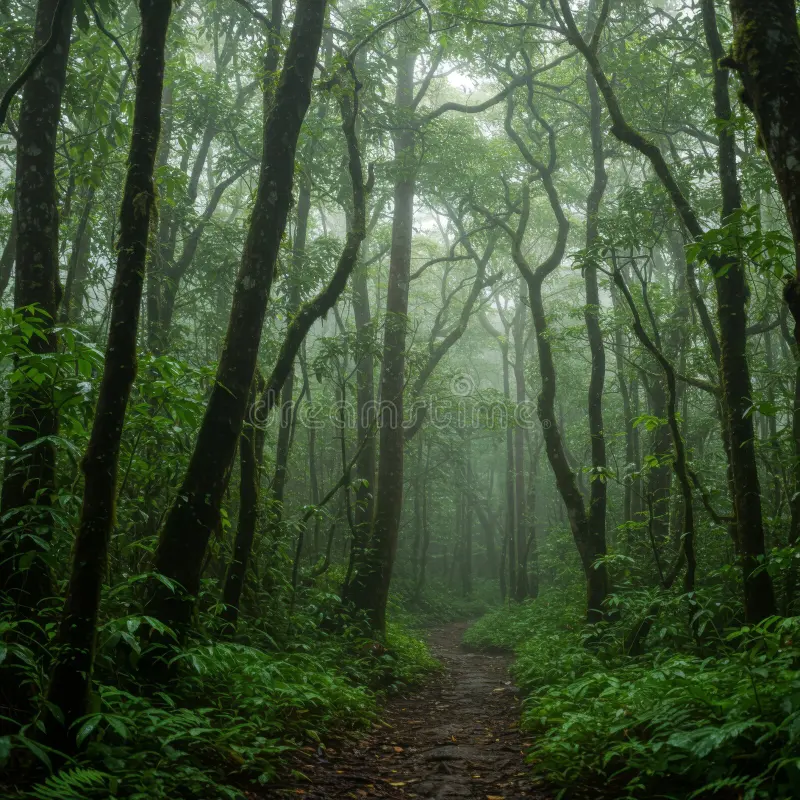
Just past the entrance and gift shop check-in, the Main Trail passes beneath a dense tropical canopy where early sunlight breaks through layers of leaves and hanging vines. Standing mid-trail and shooting upward captures the light shafts best, especially right after the gate opens.
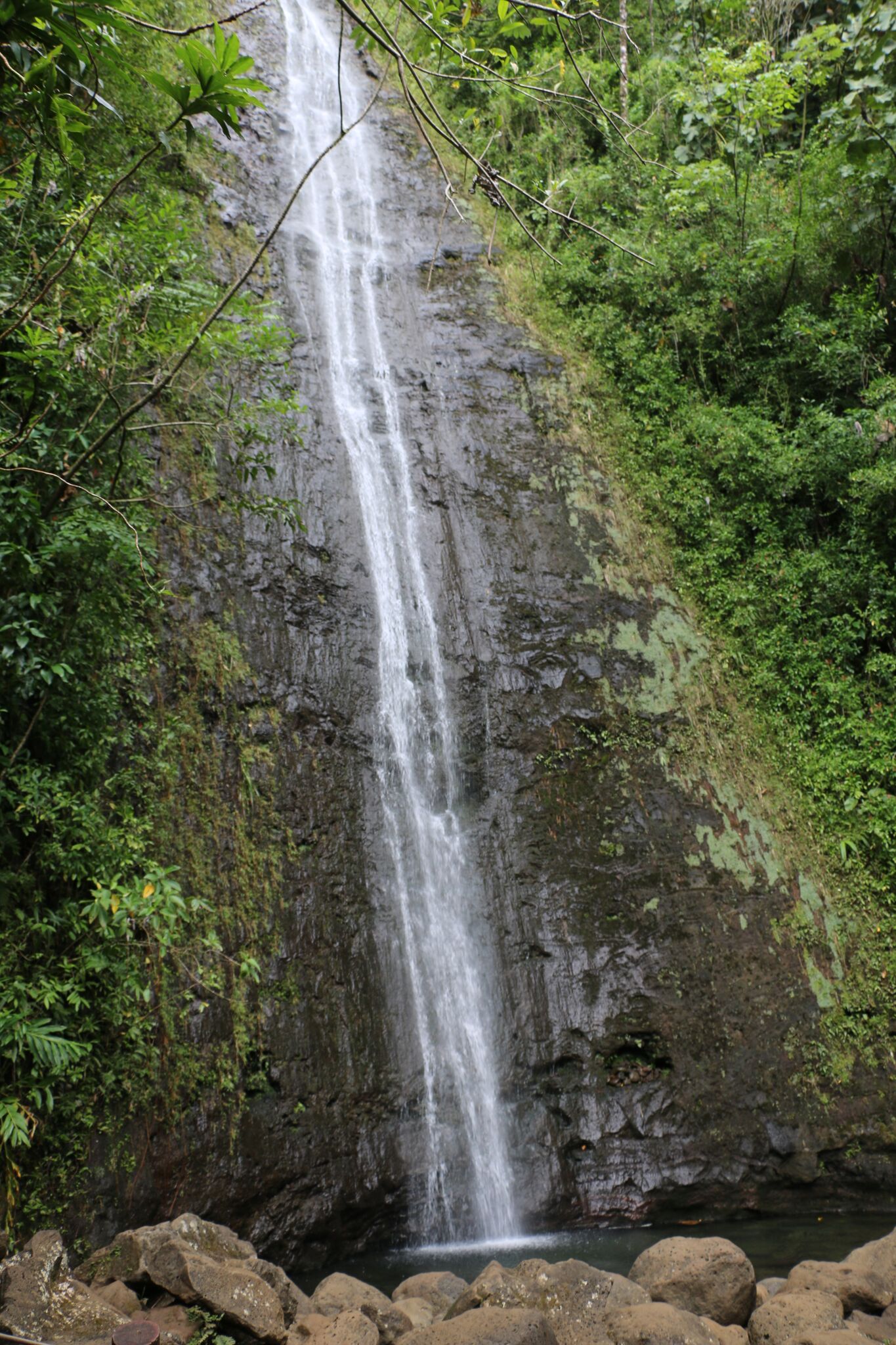
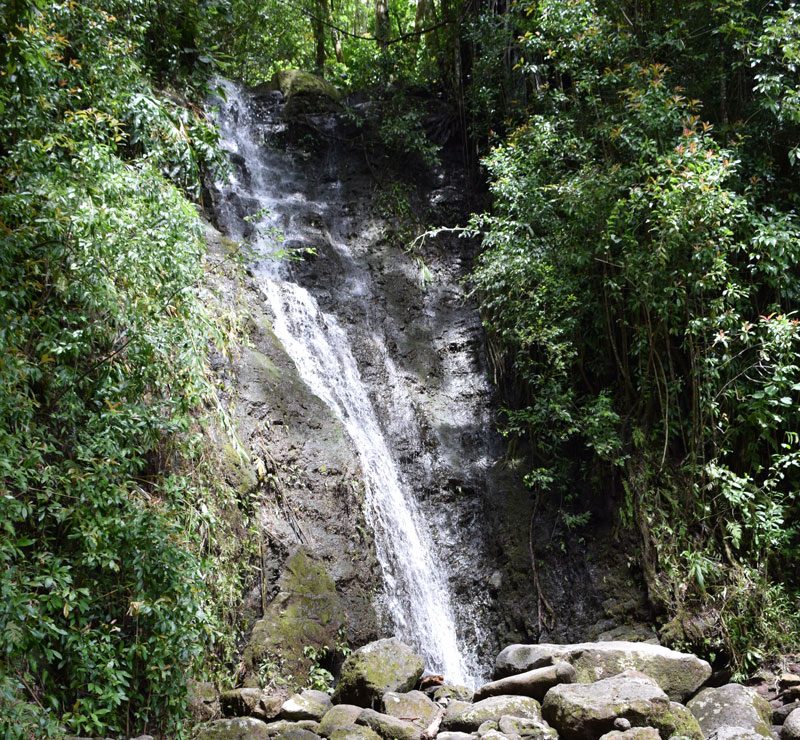
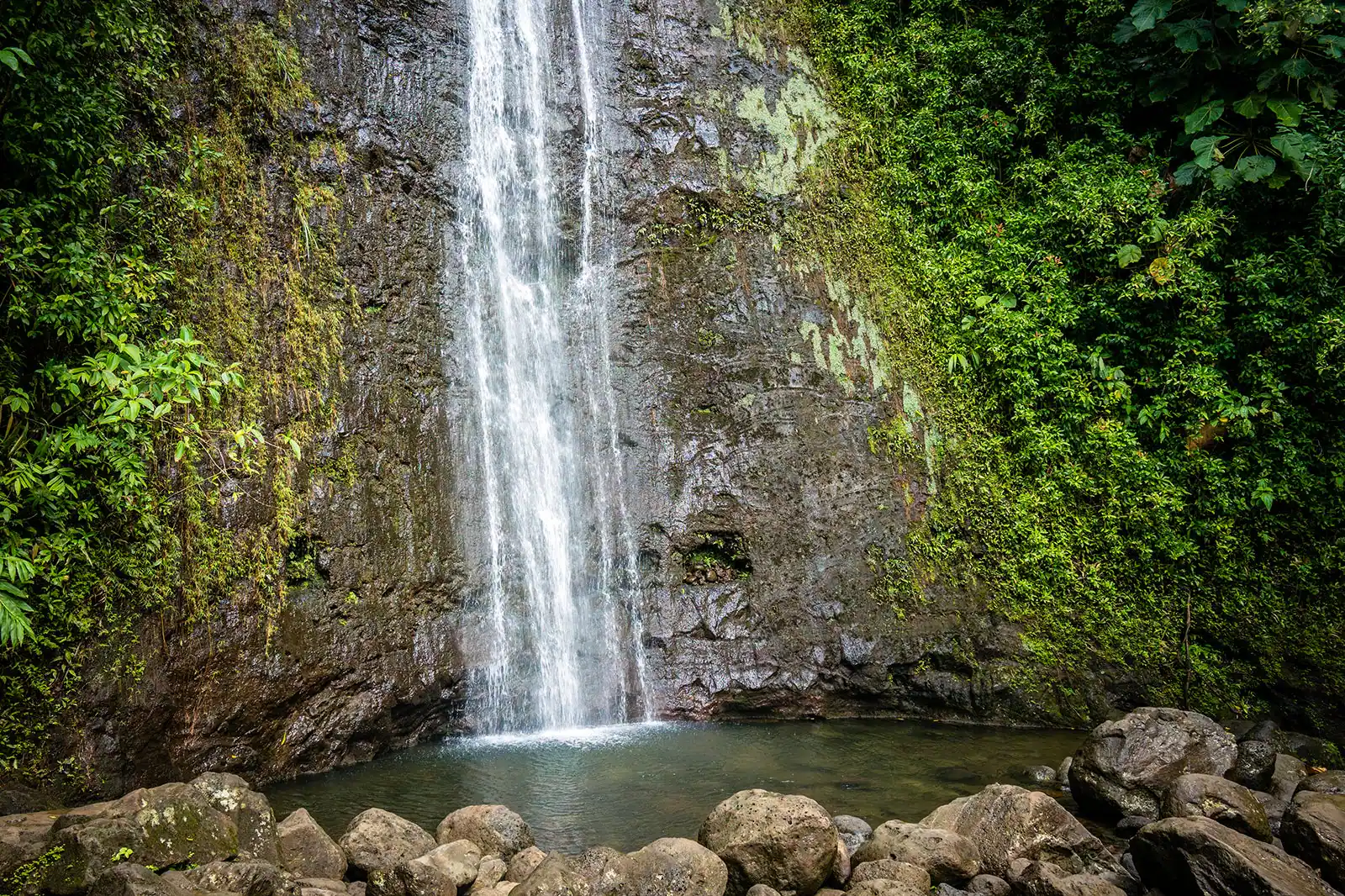
A modest, rugged waterfall tucked deep in the valley at the far end of the Main Trail, framed by mossy rock and root-tangled forest. Flow is light unless recent rain has fallen, so the shot favors mood and texture over volume.
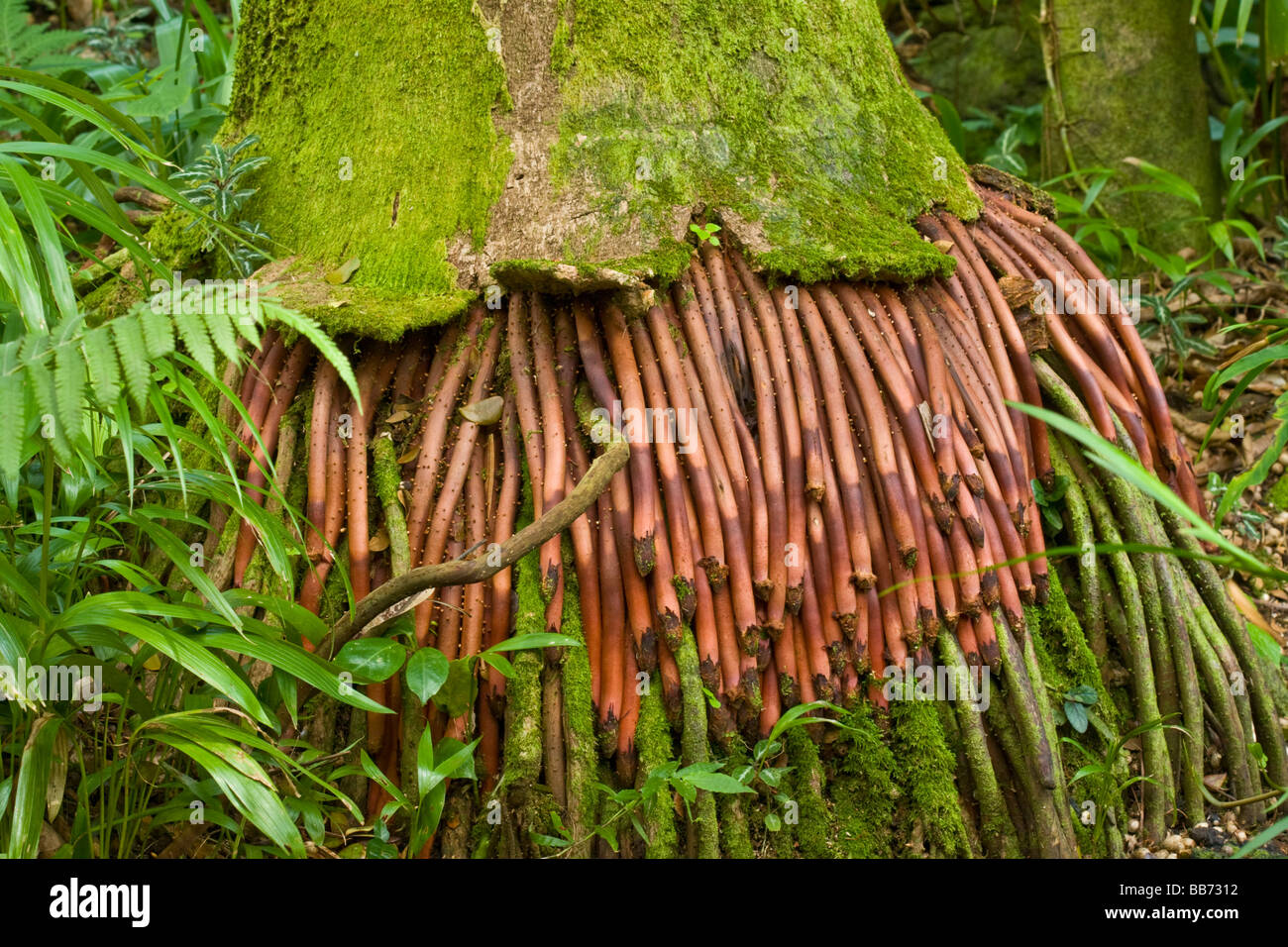
A native ethnobotanical garden of palms, ti plants, and buttress-root trees that reads like a living museum of pre-contact Hawaiian flora, with an opening in the canopy giving a rare upper-valley view on rainy days. Walk the looping path here for close-up shots of root structures and broad leaves.
Booking Lyon Arboretum Tickets for a family outing means trading paved paths for muddy rainforest trails, so plan around one restroom and no food service rather than around ride lines. Kids tend to love the Great Lawn and Herb Garden more than the deeper Aihualama Falls push.
Leave the stroller in the car; the sloped, often-muddy trails aren't stroller or wheelchair friendly beyond the paved area right around the Visitors Center. A baby carrier works better for infants and new walkers.
Toddlers and early elementary kids do well on the Great Lawn, Herb and Spice Garden, and short loop to Inspiration Point. Save the longer push to Aihualama Falls for kids who can comfortably hike 30-45 minutes each way on uneven ground.
There's a single restroom, located at the Visitors Center, so have everyone go before heading down into the grounds. Factor a buffer into your visit since there's nowhere else to go once you're on the trails.
No food or drinks are sold on site, so pack a picnic and water bottles; the Great Lawn's shaded benches make a good rest-and-snack stop partway through any Lyon Arboretum Tickets tour.
Given the 09:00-15:00 hours and single restroom, aim to arrive in the 09:00-11:00 window, do the shorter loops first, and treat the falls trail as optional based on how kids are holding up.
Manoa Valley gets frequent showers, so closed-toe shoes and bug spray matter even on a short walk. If trails turn slick, stick to the paved loop near the center rather than pushing toward the falls.
Lyon Arboretum has no café on-site, so most visitors planning Lyon Arboretum Tickets build a coffee or poke stop into their Manoa Valley itinerary before or after the trails. The two reliable options sit a few minutes' drive back toward Manoa Marketplace, making them easy add-ons whether you're doing a self-guided Honolulu botanical garden tour or a quick skip-the-line arboretum visit.
House-roasted espresso, breakfast burritos, and pastries in a cheerful Manoa storefront. Lines build fast on weekday mornings before 10am and on weekends, so arrive early if you want the breakfast burrito before it sells out. Good pre-visit fuel stop since the arboretum has no food service.
Fresh ahi poke bowls with a wide range of house-made shoyu and toppings, near Manoa Marketplace. Expect a line at midday, though it moves quickly since it's grab-and-go with limited seating. Solid post-hike lunch after wrapping up Lyon Arboretum Tickets tours through the rainforest trails.
Real experiences from real travelers
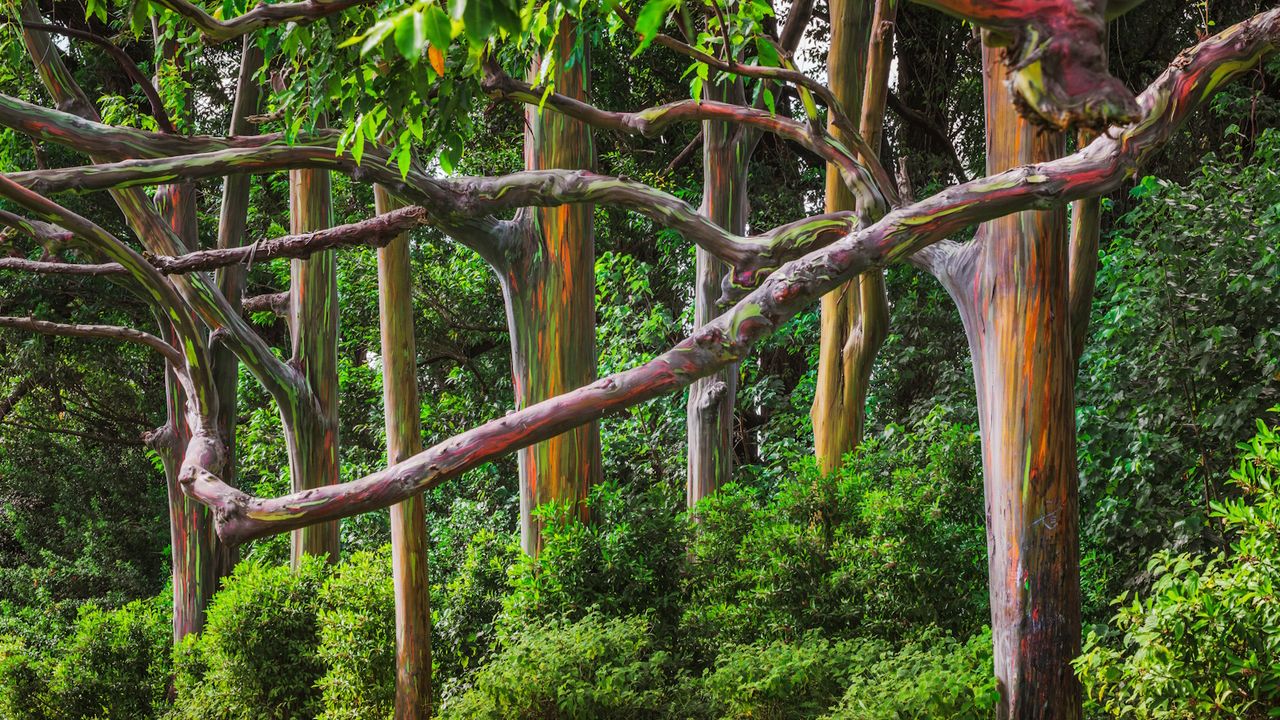
We booked Lyon Arboretum Tickets the night before and walked in without any wait at the visitor desk. The path past the rainbow eucalyptus was slick from a morning shower, but the smell of wet earth and ginger was worth the mud. Bring shoes you do not mind ruining.
Very few people on the trail even at midday, just birds and water running somewhere below the ferns. The University of Hawaiʻi research plantings are labeled well, which I appreciated as a plant person. Rain came and went three times in two hours.
The Manoa Valley botanical garden tour we joined moved slowly enough to actually look at things, which suited us. ʻAihualama Falls was thin the day we went, more of a trickle down the rock face than a proper waterfall. Still a good half-morning in the shade.
Honolulu was hot and bright, and stepping into the canopy here dropped the temperature noticeably. We reserved Lyon Arboretum Tickets tickets online and the whole check-in took under a minute. The bamboo section is the part I keep thinking about.
I came for the trees and stayed for the birdsong echoing off the valley walls. The heliconia and torch ginger near the lower loop were in full color even in February. Parking is tight, so arrive early or be ready to wait for a spot.
This is the wettest, greenest place we saw on Oʻahu and it feels nothing like the Honolulu landmarks near Waikīkī. Lyon Arboretum Tickets were straightforward to arrange and the staff pointed us toward the less trafficked paths. Mosquito repellent is not optional.
It poured for twenty minutes and the trail turned into a shallow stream, which we half expected in Mānoa. The tropical plant collection near the top of the loop is genuinely impressive, with species I had only seen in books. A walking stick would have helped.
Booked the Lyon Arboretum Tickets tour and had a small group of six, which made it easy to ask questions about the native species restoration work. Mist sat in the upper valley the whole time and never quite burned off. One of the calmer things we did in Honolulu.
The road up Mānoa Valley narrows quickly and the arboretum sits right at the end of it, hemmed in by ridge on three sides. Guided Lyon Arboretum Tickets tours are limited in size, so book ahead if you want one. The koa and ʻōhiʻa plantings alone justify the trip.
The Kōʻolau ridgeline appeared and disappeared behind cloud all morning, which made the whole valley feel enormous. Trails are rough underfoot, not paved, so this is a walking place rather than a strolling place. We spent longer than planned and did not mind.
Everything you need to know for your journey
No advance reservation is required for Lyon Arboretum Tickets, since admission is walk-in and parking is first-come, first-served.
The arboretum is open Monday through Friday from 09:00 to 15:00 and closed on Saturdays, Sundays, and state and federal holidays.
Entry is free, though a $10 per-person donation is suggested to support the arboretum's conservation and research programs.
The paved sidewalk loop near the Visitors Center reaches several memorial gardens, but the sloped forest trails beyond it are not wheelchair-accessible.
Drones without staff approval, bikes on hiking trails, off-leash pets, and littering are among the items and activities not allowed on site.
Personal photography is welcome throughout the gardens and along the trails; tripods or larger shoots need prior approval from staff.
Arriving between 09:00 and 11:00 on a weekday gives cooler temperatures and the lightest crowds before the 3pm close.
Closed-toe shoes with good tread and a light rain jacket are recommended, since Manoa Valley trails turn muddy and slick after rain.
Bottled water is fine to bring, but there is no food service on site, so pack any snacks in and carry them back out.
TheBus Route 5 runs from Ala Moana Center to the last stop in Manoa Valley, followed by about a 0.6-mile walk uphill to the entrance.
Yes, the grounds welcome families, though strollers are limited to the paved loop and the only restroom is at the Visitors Center.
Manoa Falls Trail sits a short walk below the arboretum entrance, and the University of Hawaii at Manoa campus is about a 10-minute drive away.
A popular 1.6-mile round-trip hike to an 80-foot waterfall, reached from the same access road below the arboretum gates. Trailhead parking is separate and fills early.
A ridge hike offering valley and coastline views, accessed from a trailhead near the upper Manoa neighborhood.
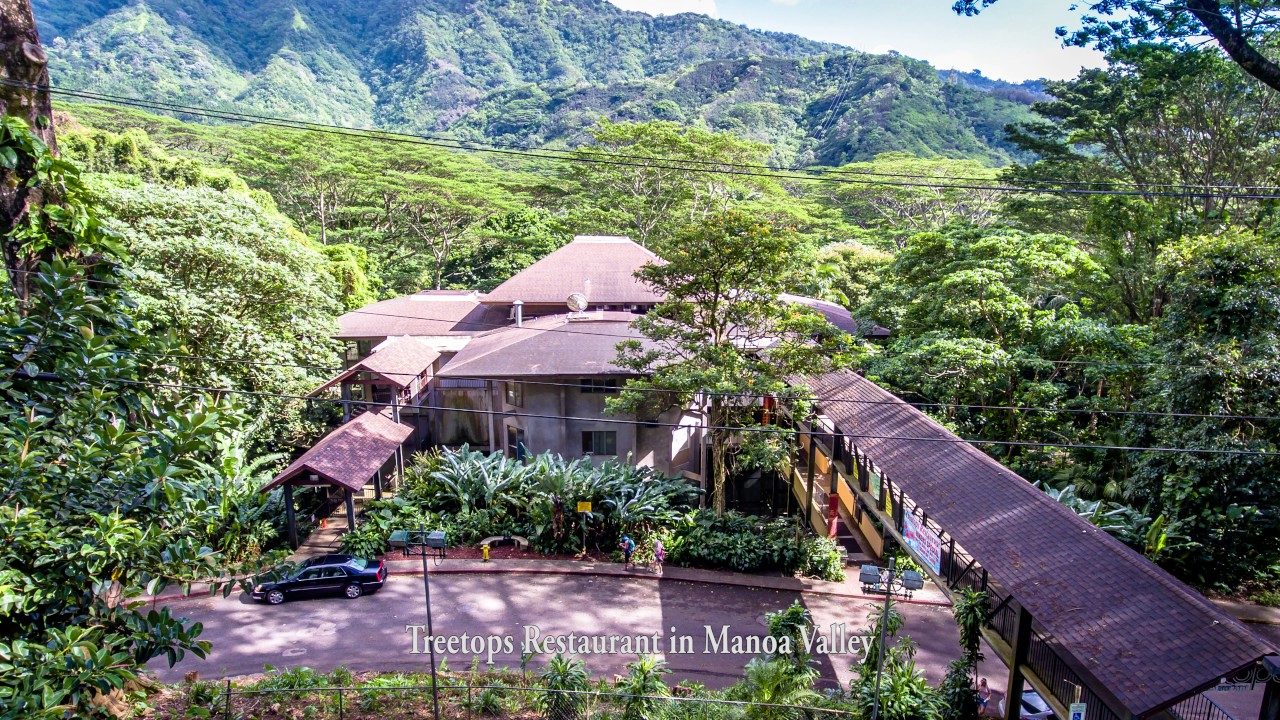
The former Paradise Park property sits just below the arboretum entrance along Manoa Road and now includes the Tropics restaurant.
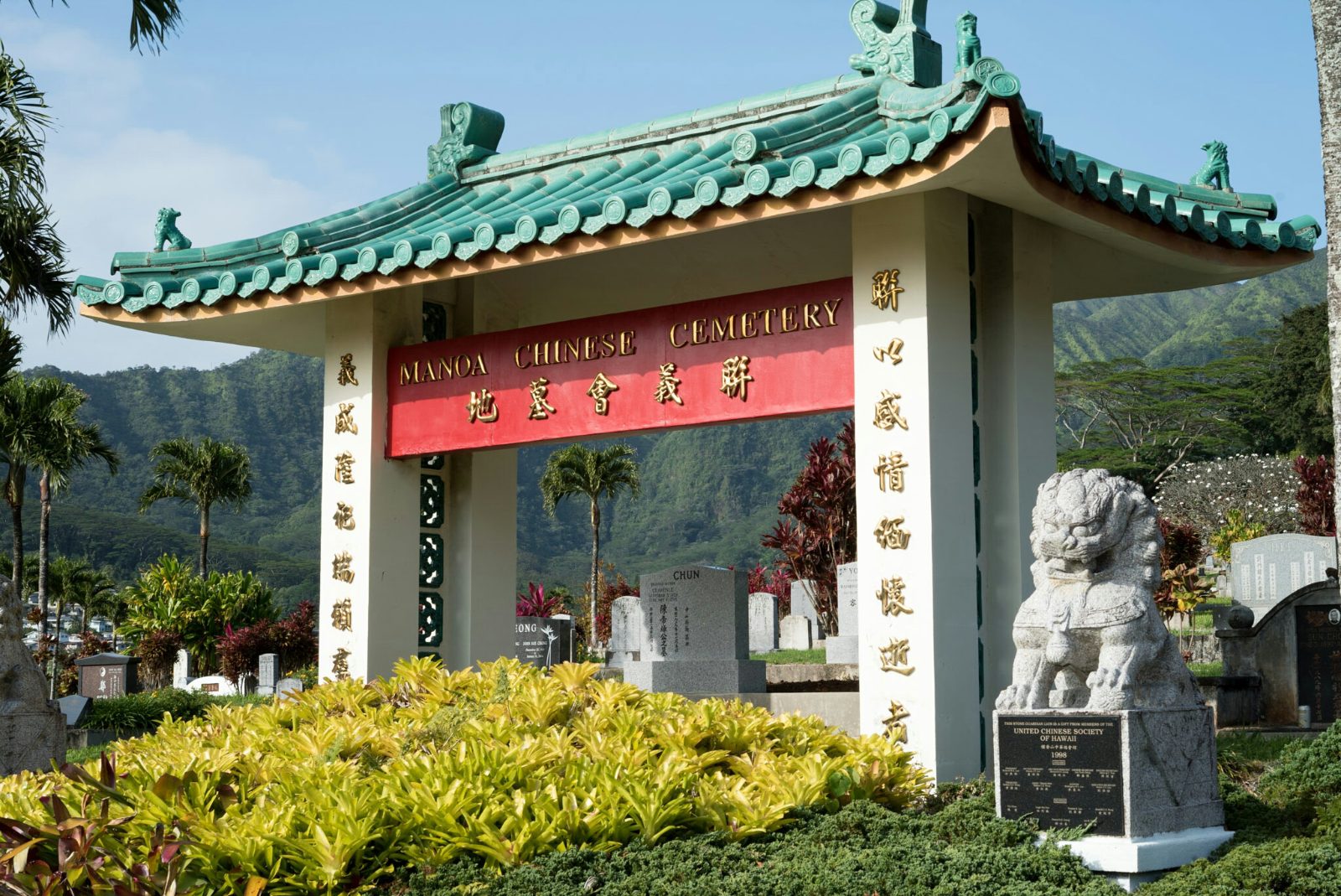
A historic hillside cemetery in Manoa Valley reflecting the area's early immigrant communities.
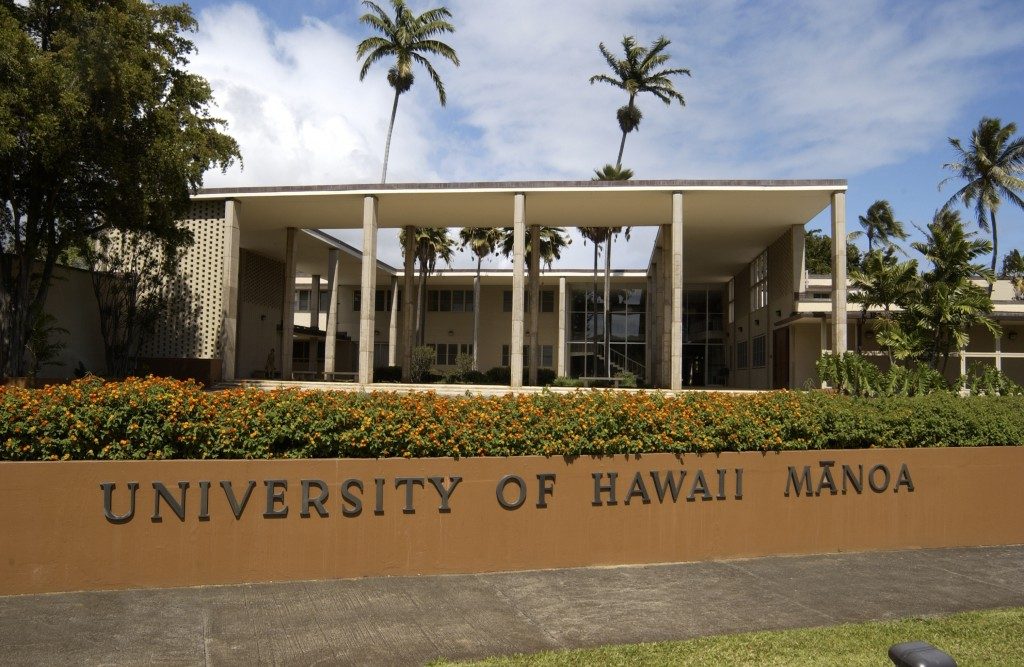
The flagship UH campus sits at the base of the valley along University Avenue, with public art and open quads.
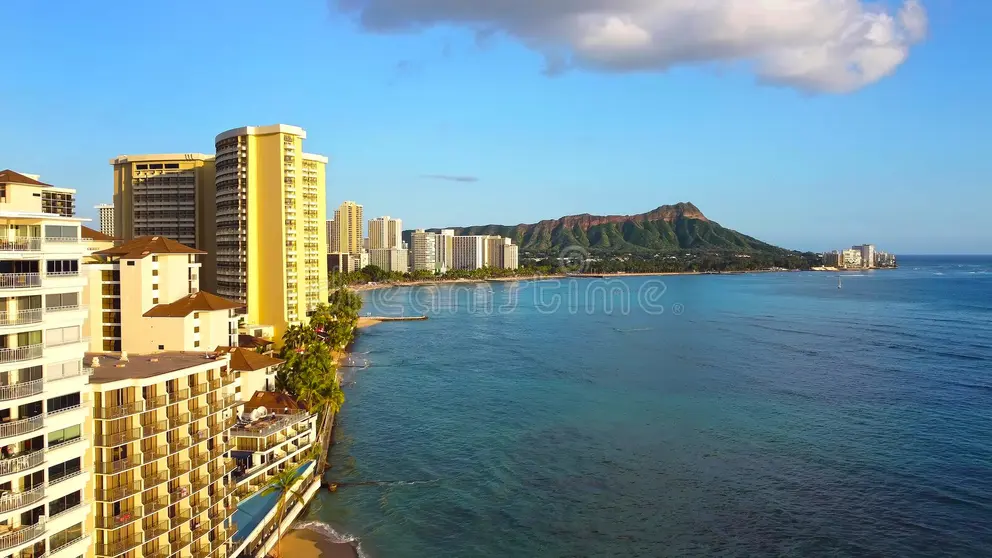
Honolulu's main hotel strip, with the widest range of oceanfront and mid-range properties near the beach.
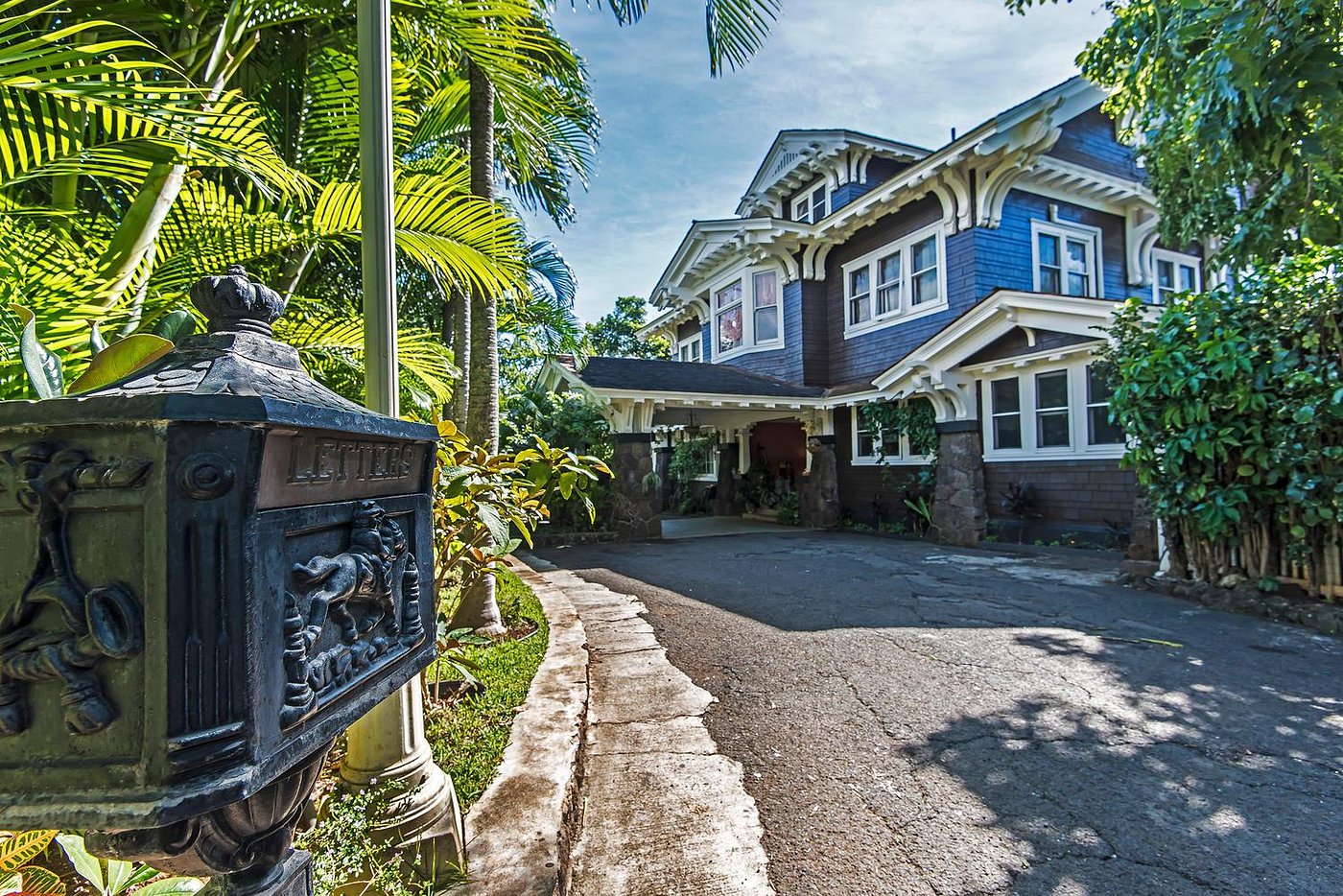
A restored early-1900s plantation-era home turned bed-and-breakfast near the University of Hawaii campus.
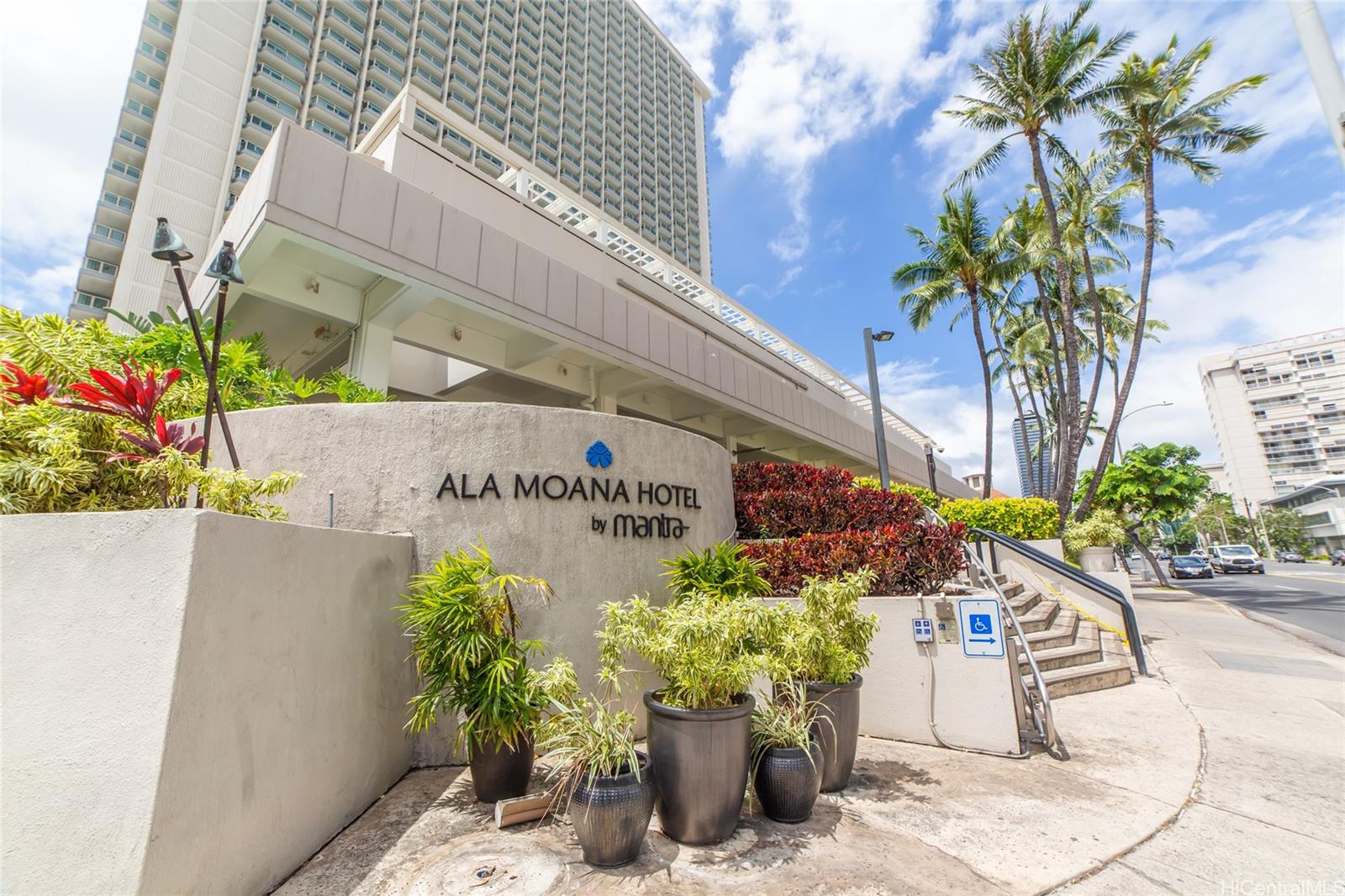
Hotels clustered around Ala Moana Center offer easy access to the #5 bus route toward the arboretum.
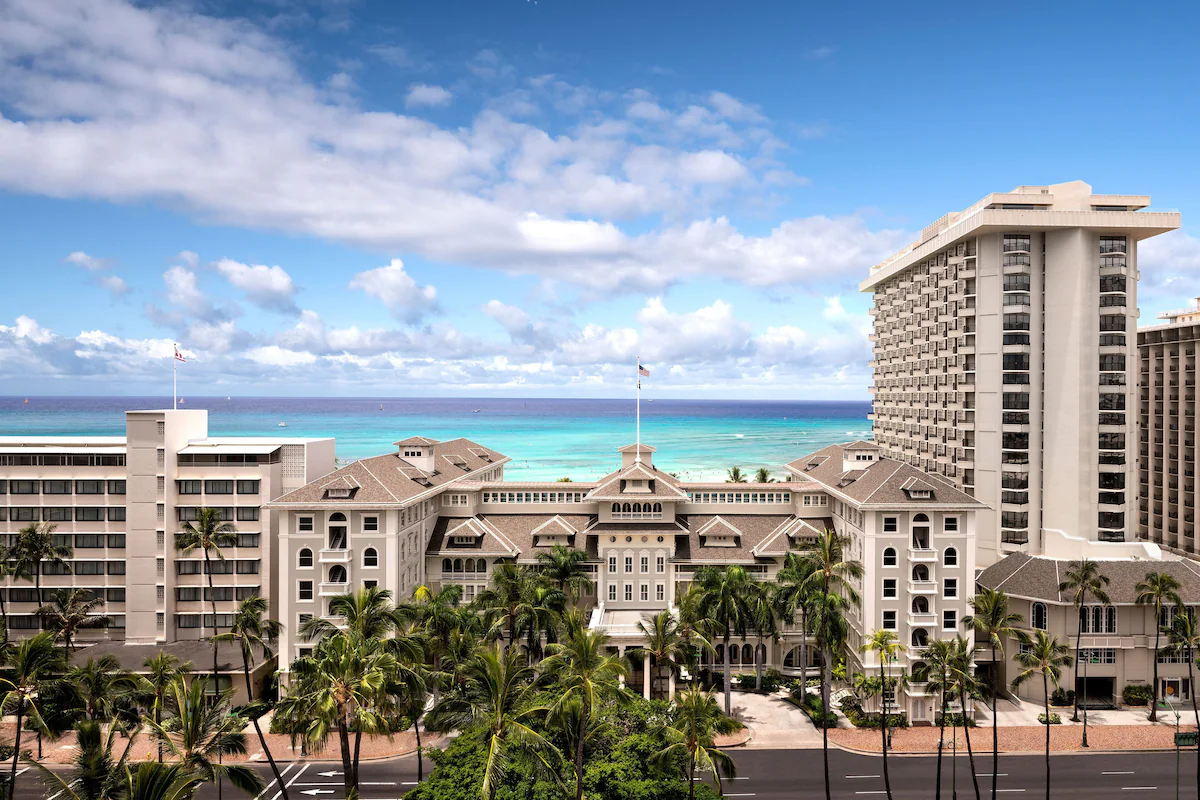
A historic beachfront hotel on Waikiki Beach dating to 1901.
Join thousands of happy travelers who have discovered this incredible experience
Book Your Experience Now